When choosing birth control, many women prioritize effectiveness, convenience, and safety but an often overlooked concern is weight gain. Some birth control methods have been associated with weight changes, either due to hormonal fluctuations, water retention, or changes in appetite.
This can make the decision process overwhelming, especially if you’re keen on maintaining your current weight or avoiding weight gain altogether.
While not all birth control methods have the same effects on weight, it’s essential to understand which options are least likely to cause changes in your body. Whether you’re new to birth control or considering switching methods, knowing the potential risks and benefits can help you make an informed choice.
In this article, we’ll explore the best birth control methods that minimize the risk of weight gain, so you can choose the option that aligns with both your health and lifestyle goals.
Understanding the Link Between Birth Control and Weight Gain
The relationship between birth control and weight gain is complex and varies depending on the method you use. Hormonal contraceptives, in particular, can impact your weight through several mechanisms. Estrogen and progestin, the hormones in many birth control methods, can influence appetite, metabolism, and fluid retention. For example, some people may experience an increase in hunger, while others might retain water, leading to a temporary weight gain.
However, it’s important to note that not all birth control methods affect everyone in the same way. Studies show that while some individuals may gain weight on certain contraceptives, many others report little to no change. The way your body reacts to birth control depends on a variety of factors, including your natural hormone balance, lifestyle, and the specific method you’re using.
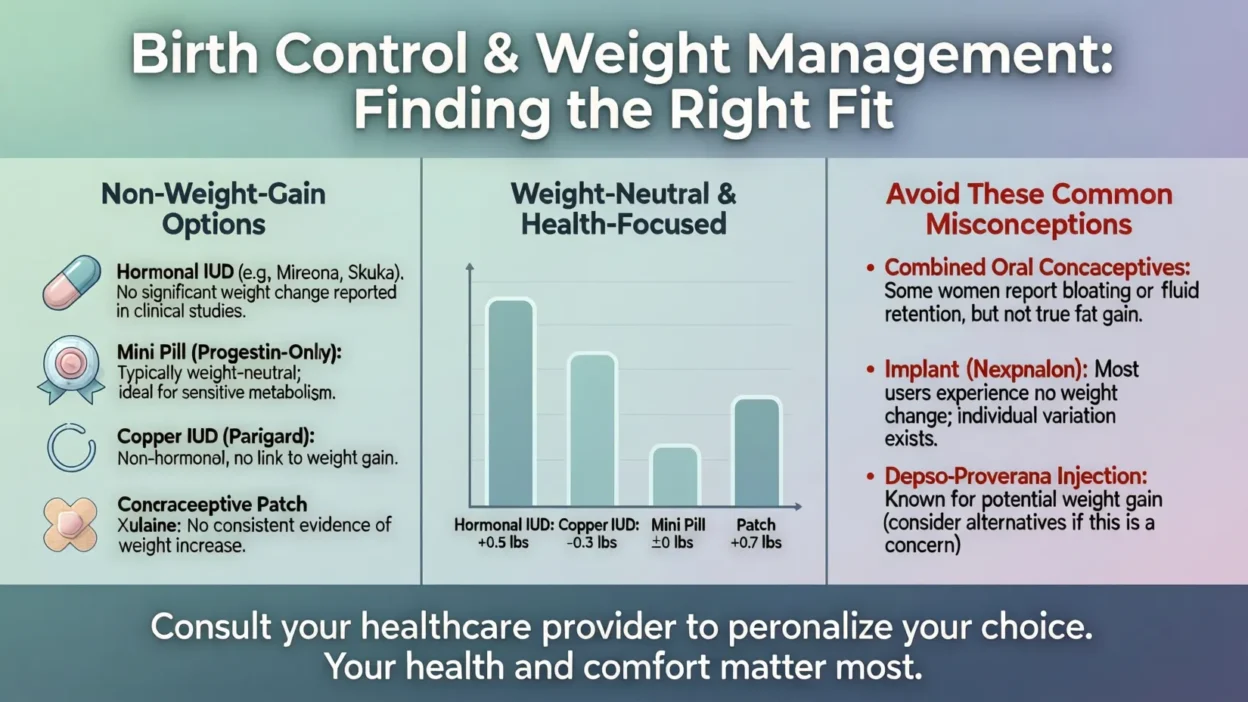
While some methods like the Depo-Provera shot have a stronger association with weight gain, others, such as the IUD or progestin-only pills, tend to have fewer weight-related side effects. By understanding how each method works, you can make a more informed decision and find the best birth control option to suit your needs without compromising your weight goals.
Types of Birth Control and Their Potential Impact on Weight
When it comes to choosing birth control, understanding how different methods affect weight is crucial. Here’s a breakdown of some of the most common types and their potential impact on weight:
Hormonal Birth Control Methods
- Combined Oral Contraceptives (COCs): These contain both estrogen and progestin. While generally effective, COCs can sometimes cause weight gain due to hormonal changes that affect appetite and water retention. However, studies show that the weight gain is often minimal for many users.
- Progestin-Only Pills (POPs): These pills contain only progestin, which has less impact on weight than estrogen. For most women, POPs cause fewer weight-related side effects. However, some may still experience slight weight gain, typically from fluid retention.
- Contraceptive Injections (Depo-Provera): Depo-Provera is linked to more significant weight gain in some users. Research suggests that the shot can cause an increase in appetite, leading to weight gain of 5-10 pounds or more over time.
- Hormonal IUDs (Mirena, Skyla): These devices release small amounts of progestin directly into the uterus, resulting in minimal hormonal impact on the rest of the body. Weight gain is not common, but some women report slight changes.
Non-Hormonal Birth Control Methods
- Copper IUD: A hormone-free option, the copper IUD doesn’t affect your weight at all. It’s a great choice for those looking to avoid any hormonal side effects.
The Best Birth Control Options to Avoid Weight Gain
If you’re concerned about weight gain while using birth control, there are several options that are less likely to cause changes in your body weight. Here are some of the best choices:
1. Copper IUD (Non-Hormonal)
The copper IUD is one of the best birth control options for those who want to avoid weight gain. Since it doesn’t contain hormones, it won’t affect your appetite or cause fluid retention. It’s also over 99% effective and lasts up to 10 years, making it a low-maintenance and reliable choice for long-term contraception.
2. Progestin-Only Pills (POP)
Progestin-only pills tend to have fewer weight-related side effects compared to combined hormonal birth control. These pills mainly affect the uterus and have minimal impact on metabolism. While some users may experience slight weight fluctuations, the risk of significant weight gain is low. POPs are a great option for those sensitive to estrogen.
3. Birth Control Implant (Nexplanon)
The birth control implant, a small rod placed under the skin of your arm, releases progestin to prevent pregnancy. Like the IUD, it has a minimal systemic effect and doesn’t cause significant weight gain for most women. The implant is effective for up to three years and is a great choice for long-term birth control without weight concerns.
Factors to Consider When Choosing Birth Control
Choosing the right birth control method goes beyond just considering its effectiveness in preventing pregnancy; it’s also essential to evaluate how it aligns with your personal health, lifestyle, and weight goals. Here are some key factors to keep in mind:
1. Health History and Personal Goals
Your overall health plays a significant role in determining which birth control method is right for you. For example, women with a history of obesity, PCOS (Polycystic Ovary Syndrome), or thyroid issues might respond differently to hormonal contraceptives. Discussing your health background with a healthcare provider can help identify the best method that minimizes side effects like weight gain.
2. Effectiveness vs. Weight Gain Risk
While some birth control methods are more effective at preventing pregnancy than others, they might carry a higher risk of weight gain (e.g., Depo-Provera). Weighing the effectiveness of a method against its potential to cause weight changes will help you make a balanced decision.
3. Convenience and Lifestyle
Consider your lifestyle preferences: do you prefer a low-maintenance, long-term option like an IUD or implant, or would you rather have daily control with a pill? Your choice will depend on how much effort you’re willing to invest in maintaining your contraception routine.
Common Concerns & FAQs
When considering birth control, many people have questions about potential side effects, especially when it comes to weight gain. Here are answers to some of the most common concerns:
1. Can I switch birth control if I start gaining weight?
Yes, if you notice weight gain or other side effects with your current method, it’s important to consult with your healthcare provider. They can help you switch to a method that better suits your body’s needs, such as opting for a progestin-only pill or a non-hormonal method like the copper IUD.
2. Is there any birth control that guarantees no weight gain?
While no method can guarantee zero weight gain, non-hormonal options like the copper IUD or barrier methods (e.g., condoms) are less likely to affect your weight. However, it’s important to remember that individual responses can vary, and other factors like diet and exercise also play a role.
3. How quickly will weight changes be noticeable?
If you experience weight gain due to birth control, it typically occurs within the first few months of use. For methods like Depo-Provera, weight changes may become noticeable after several months. If weight gain becomes a concern, it’s important to discuss it with your doctor promptly.
4. Can diet and exercise mitigate birth control-related weight gain?
Yes, maintaining a healthy diet and regular exercise routine can help manage weight while using birth control, especially for those on hormonal methods. Staying active and eating balanced meals can reduce the impact of any weight-related side effects.
Scientific Studies on Birth Control and Weight Gain
Understanding the science behind birth control and weight gain is essential when choosing the right contraceptive method. Over the years, several studies have explored the connection between hormonal contraception and changes in body weight. While many studies show minimal weight gain, others highlight certain methods that are more strongly linked to weight changes.
1. Research on Hormonal Contraceptives
A study published in Obstetrics and Gynecology found that women using hormonal contraceptives like combined oral contraceptives (COCs) and Depo-Provera may experience slight weight changes, especially in the first few months of use. However, these studies also emphasize that the majority of women on hormonal birth control see no significant long-term weight gain.
2. Depo-Provera and Weight Gain
Depo-Provera (the birth control shot) has been the subject of several studies indicating that it can cause weight gain, with some women gaining up to 10 pounds over a year of use. The hormone in Depo-Provera can increase appetite and promote fat storage, making weight gain more likely for some individuals.
3. IUDs and Weight
In contrast, studies on hormonal IUDs (like Mirena) suggest that weight gain is less common, with some women even experiencing slight weight loss due to their low systemic hormone release. The copper IUD, being hormone-free, shows no evidence of weight gain, making it a favored choice for weight-conscious individuals.
Conclusion
Choosing the right birth control method is a personal decision that involves balancing effectiveness with potential side effects, including weight gain. While some hormonal methods are linked to changes in body weight, many options are available that minimize these risks. Non-hormonal methods like the copper IUD and barrier methods are the most weight-neutral, offering peace of mind for those looking to avoid weight gain altogether.
For those opting for hormonal birth control, options such as progestin-only pills, implants, and hormonal IUDs tend to have fewer weight-related side effects compared to combined oral contraceptives or the Depo shot. However, it’s important to remember that everyone’s body reacts differently to birth control, and individual experiences can vary.
Consulting with a healthcare provider is crucial in making an informed decision that aligns with your health, lifestyle, and weight goals. By discussing your options and monitoring your body’s response, you can find the best birth control method to fit your needs without compromising your well-being.
Ultimately, the best birth control is the one that works for you whether that means avoiding weight gain or choosing a method that suits your overall health needs. Take the time to explore your options and choose wisely.

I’m Leo, the Pun Master behind Punsboxx.com. I turn everyday words into laugh-worthy puns that’ll tickle your brain and brighten your day!