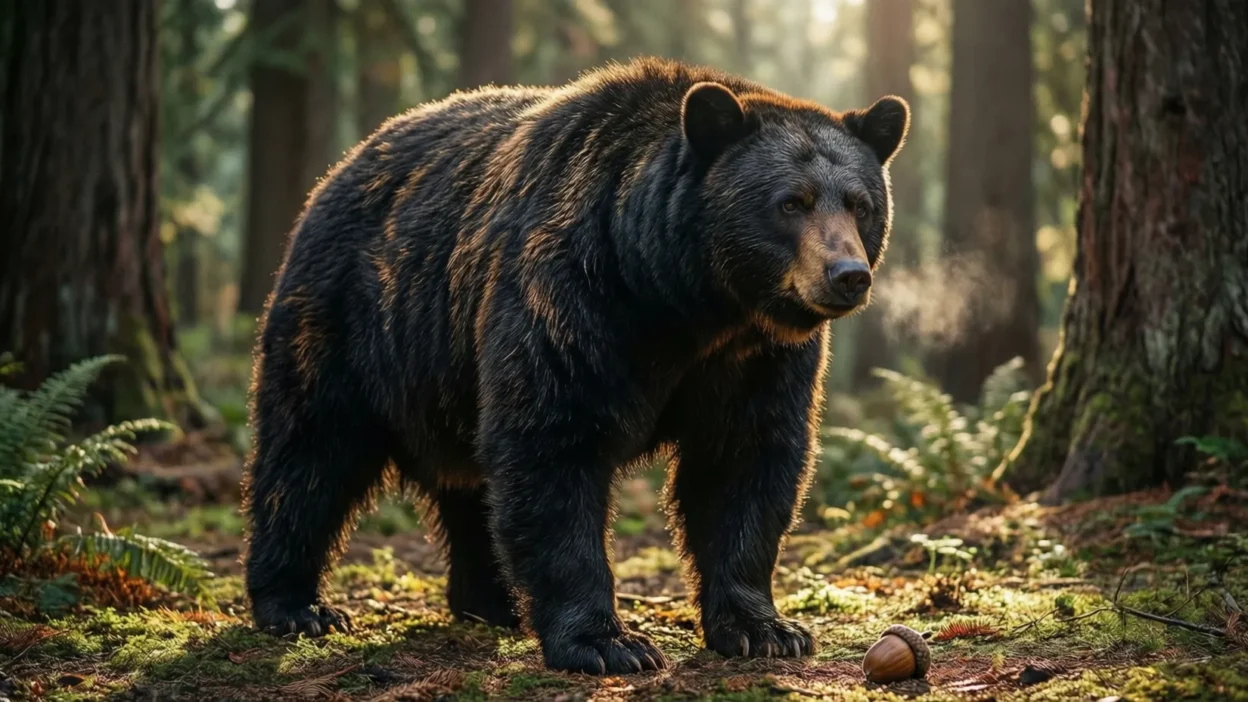
Black bears (Ursus americanus) are among the most widespread and adaptable bear species in North America, yet one of the most common questions people ask is: how much does a black bear weigh? The answer isn’t simple, because black bear weight can vary dramatically depending on factors such as age, sex, geographic location, diet, and even the time of year. A small female black bear in the southern United States may weigh less than 150 pounds, while a large adult male in northern regions can exceed 600 pounds before hibernation.
Understanding black bear weight is more than just a matter of curiosity. It plays a critical role in wildlife biology, conservation efforts, and human safety in bear country. Weight influences a bear’s strength, behavior, survival during hibernation, and overall health. In this guide, we’ll take an in-depth look at average black bear weight, how it changes throughout a bear’s life, and what causes such dramatic differences across regions and seasons.
What Is the Average Weight of a Black Bear?
The average weight of a black bear varies widely, but most healthy adult black bears fall within a predictable range. On average, adult male black bears weigh between 200 and 600 pounds, while adult females are typically smaller, weighing between 100 and 400 pounds. This size difference is due to sexual dimorphism, a common trait in bears where males grow significantly larger than females.
Age plays an important role in determining a black bear’s weight. Newborn cubs are surprisingly small, usually weighing less than one pound at birth. During their first year, cubs grow rapidly while nursing and later transitioning to solid food, often reaching 30 to 60 pounds by the time they emerge from their first den. Juvenile and subadult bears continue gaining weight steadily as they mature, with most black bears reaching their full adult size between five and eight years of age.
Seasonal timing also affects what is considered “average” weight. In late summer and fall, black bears enter a phase known as hyperphagia, during which they consume massive amounts of food to build fat reserves for hibernation. During this period, a bear’s weight can increase by 30 percent or more, meaning fall weights are often much higher than spring weights. As a result, averages should always be viewed in context, accounting for sex, age, location, and season rather than as a single fixed number.
Black Bear Weight by Geographic Region
Geographic location has a major influence on black bear weight, largely due to differences in climate, habitat quality, and food availability. In general, black bears living in northern regions tend to be significantly heavier than those found farther south. Colder climates require bears to build larger fat reserves to survive long winters, leading to greater overall body mass.
In Alaska and northern Canada, black bears often reach the upper end of the species’ weight range. Adult males in these areas commonly weigh 400 to 600 pounds, with exceptional individuals exceeding that during peak fall conditions. These regions offer abundant seasonal food sources such as salmon, berries, and high-calorie vegetation, which support rapid weight gain before hibernation.
In contrast, black bears in the eastern United States—including the Appalachian Mountains and the Great Lakes region—generally weigh slightly less but are still robust. Adult males in these areas typically range from 300 to 500 pounds, benefiting from mixed forests rich in nuts, acorns, and agricultural crops. Some of the heaviest black bears on record have come from eastern states where food availability is high and winters are moderate.
Southern black bears, found in states like Florida, Louisiana, and parts of Mexico, are usually smaller. Shorter winters reduce the need for extreme fat storage, and food sources are more spread out throughout the year. As a result, adult males in southern regions often weigh 200 to 400 pounds, while females are considerably lighter. These regional differences highlight how environment and climate directly shape black bear weight and overall size.
Seasonal Weight Changes in Black Bears
Seasonal changes have a profound effect on black bear weight, making the time of year one of the most important factors when discussing how much a black bear weighs. Black bears experience dramatic weight fluctuations as part of their natural survival strategy, particularly in regions with cold winters.
During late summer and fall, black bears enter a phase known as hyperphagia, a period of intense feeding that can last several months. During this time, bears may consume 15,000 to 20,000 calories per day, focusing on high-energy foods such as berries, nuts, insects, fish, and human-associated food sources when available. As a result, black bears can gain several pounds per day, increasing their body weight by 30 to 40 percent before winter.
Once winter arrives, black bears enter hibernation, a state of reduced metabolic activity that can last anywhere from three to seven months, depending on location. During hibernation, bears do not eat, drink, urinate, or defecate. Instead, they survive by slowly metabolizing stored body fat. Adult black bears typically lose 15 to 30 percent of their fall body weight during this period. Pregnant females may lose even more due to the added energy demands of giving birth and nursing cubs in the den.
When black bears emerge in spring, they are at their lowest annual weight and often appear thin compared to their fall condition. Over the following months, they gradually rebuild muscle and fat as food becomes more available, beginning the annual cycle of weight gain once again.
Diet and Its Impact on Black Bear Weight
A black bear’s diet plays a crucial role in determining its overall weight and body condition. Black bears are omnivores, meaning they eat a wide variety of foods, and their flexible diet allows them to adapt to many different environments. The quality, quantity, and availability of food directly influence how much weight a black bear can gain throughout the year.
In the wild, black bears rely heavily on plant-based foods, which can make up 70 to 90 percent of their diet. Common natural food sources include berries, nuts, acorns, grasses, roots, and other vegetation. These foods are especially important in late summer and fall, when high-calorie nuts and fruits help bears build the fat reserves needed for hibernation. Black bears also consume insects, larvae, small mammals, carrion, and fish when available, providing valuable protein that supports muscle growth.
In areas close to human development, some black bears gain access to human-associated food sources such as garbage, agricultural crops, bird feeders, and pet food. These calorie-dense foods can cause bears to gain weight more quickly than they would on a natural diet. While this may lead to unusually heavy bears, it also creates serious problems, including poor nutrition, obesity, and increased risk of human–bear conflict.
Ultimately, black bears that rely on diverse, natural food sources tend to maintain healthier body weights and better long-term survival. Wildlife managers closely monitor bear diets because abnormal weight gain or loss can be an important indicator of ecosystem health and human impact on bear populations.
Growth Patterns and Development
Black bears follow a steady but highly variable growth pattern from birth to adulthood, with weight gain influenced by genetics, nutrition, and environmental conditions. Newborn black bear cubs are extremely small, typically weighing less than one pound at birth. Born blind and hairless during winter hibernation, cubs rely entirely on their mother’s milk, which is rich in fat and nutrients that promote rapid early growth.
By the time cubs leave the den in spring, they often weigh 5 to 10 pounds, and their growth accelerates throughout their first summer and fall. Cubs may reach 30 to 60 pounds before entering their first winter. During this early stage, food availability and the mother’s health play a critical role in determining how much weight young bears gain.
Juvenile black bears continue to grow rapidly between the ages of one and three, often doubling or tripling their body weight as they learn to forage independently. Growth slows slightly during the subadult phase, but bears continue gaining mass and muscle as their skeletal structure matures. Most black bears reach their full adult weight between five and eight years of age, although males may continue to increase in size for several additional years.
As black bears age, weight trends can shift. Prime-aged adults typically maintain stable, healthy body weights, while older bears may lose weight due to tooth wear, injury, or reduced foraging efficiency. Understanding these growth patterns helps biologists assess population health and predict how environmental changes may affect future black bear sizes.
How Heavy Can a Black Bear Get?
While average black bear weights fall within a well-known range, some individuals grow far larger under the right conditions. Large adult male black bears in prime habitats can weigh 600 pounds or more, especially during the fall when fat reserves are at their peak. Exceptional cases have documented black bears weighing 800 pounds or more, though such sizes are rare and considered outliers.
Several factors contribute to unusually heavy black bears. Genetics plays a role, as some bears inherit traits that allow for greater body size and more efficient fat storage. Food availability is equally important. Bears with consistent access to calorie-rich foods—such as salmon runs, abundant nut crops, or human-related food sources—are more likely to reach extreme weights. Long growing seasons and shorter hibernation periods also allow bears to spend more time feeding and gaining mass.
It’s important to distinguish between healthy large bears and overweight bears. A heavy black bear in the wild often carries most of its mass as fat needed for survival during hibernation. However, bears that rely heavily on human food may develop unhealthy fat distribution and reduced muscle tone, even if they weigh more than average.
Despite occasional reports of massive black bears, claims of individuals weighing 1,000 pounds or more are generally unverified or exaggerated. Wildlife biologists emphasize that while black bears can become very large, there are natural biological limits to their size. Understanding these limits helps separate fact from myth and provides a realistic perspective on black bear weight extremes.
Black Bear Weight Compared to Other Bear Species
When discussing black bear weight, it’s helpful to compare them to other bear species to better understand where they fall on the size spectrum. Black bears are generally smaller and lighter than both brown bears and polar bears, although there can be some overlap with smaller individuals of those species.
Grizzly bears, a subspecies of brown bear, are significantly heavier on average. Adult male grizzlies often weigh between 400 and 800 pounds, with coastal populations sometimes exceeding 1,000 pounds due to access to salmon-rich diets. While a very large black bear may approach the lower weight range of a small grizzly, grizzlies typically have more muscle mass, broader shoulders, and a pronounced shoulder hump that black bears lack.
Brown bears in general—including inland and coastal populations—outweigh black bears by a substantial margin. Coastal brown bears are among the heaviest land predators in the world, benefiting from high-calorie marine food sources that allow them to build massive fat reserves.
Polar bears are the largest bear species by far. Adult male polar bears commonly weigh 900 to 1,600 pounds, dwarfing even the largest black bears. Their size is an adaptation to cold Arctic environments and a diet rich in marine mammals.
Despite being smaller, black bears are highly agile and strong for their size. Their lighter weight contributes to their excellent climbing ability and adaptability, traits that have helped them thrive across a wide range of habitats.
How Scientists Measure Black Bear Weight
Measuring the weight of a black bear in the wild is a complex process that requires specialized equipment, training, and strict safety protocols. Wildlife biologists typically obtain accurate weight measurements during research, relocation, or health assessments, when bears are temporarily captured and sedated.
One common method involves using live traps or culvert traps, which allow bears to be safely contained. Once sedated, the bear is placed on a heavy-duty scale capable of supporting several hundred pounds. This method provides the most accurate data and is often combined with other measurements such as body length, chest girth, tooth condition, and fat thickness. These additional data points help researchers assess overall health, not just weight alone.
In situations where weighing a bear directly is not possible, scientists may rely on estimation techniques. Chest girth and body length measurements can be used in mathematical formulas to estimate body mass with reasonable accuracy. Track size, while sometimes mentioned, is far less reliable and should not be used alone to estimate weight.
Despite these methods, challenges remain. Bears gain and lose weight rapidly depending on the season, so a single measurement represents only a snapshot in time. Weather, food availability, and reproductive status can also affect results. For this reason, biologists often collect long-term data from the same populations to identify trends. Accurate weight data is essential for understanding black bear health, managing populations, and making informed conservation decisions.
Black Bear Weight and Human Safety
While black bear weight alone does not determine how dangerous a bear may be, size and mass do play an important role in the outcome of human–bear encounters. A heavier black bear possesses greater strength, momentum, and physical power, which can increase the risk of serious injury during a confrontation. However, behavior, circumstances, and human actions are far more important factors than weight alone.
Most black bears are naturally shy and prefer to avoid people, regardless of their size. Defensive encounters typically involve females protecting cubs or bears startled at close range, while food-conditioned bears may approach humans more boldly. Larger bears, especially adult males, may be more confident in asserting dominance over food sources, but they are not inherently more aggressive.
Understanding black bear weight can help people better appreciate the animal’s physical capabilities. Even an average-sized black bear weighing 300 pounds can run faster than a human, climb trees with ease, and deliver powerful swipes. This underscores the importance of practicing proper safety measures in bear country, such as storing food securely, making noise while hiking, and giving bears plenty of space.
Wildlife agencies emphasize prevention over confrontation. Reducing access to human food helps keep bears at natural body weights and lowers the likelihood of dangerous encounters. Recognizing that black bears—regardless of size—are wild animals deserving of respect is key to coexisting safely in shared environments.
Conservation and Ecological Importance of Black Bear Weight
Black bear weight is more than just a physical measurement—it is an important indicator of ecosystem health and population stability. Wildlife biologists use weight data to assess whether bears have access to sufficient natural food sources and to identify potential environmental problems. Consistently underweight bears may signal habitat loss, food shortages, or increased competition, while unusually heavy bears can indicate overreliance on human-provided food.
Healthy black bear populations typically show predictable seasonal weight cycles, with strong weight gain in the fall and gradual loss during hibernation. When these patterns are disrupted, it can suggest broader ecological changes. For example, poor berry or nut crops caused by drought, wildfires, or climate change can limit a bear’s ability to build fat reserves, reducing survival rates—especially for cubs and pregnant females.
Climate change is increasingly influencing black bear weight trends. Warmer winters may shorten hibernation periods, altering traditional feeding cycles. In some regions, extended growing seasons may increase food availability, while in others, extreme weather events reduce critical food sources. These shifts can lead to long-term changes in average black bear body size and weight.
Wildlife management agencies rely on weight data when setting hunting regulations, managing human–bear conflict, and planning conservation strategies. By monitoring changes in black bear weight over time, scientists gain valuable insight into how environmental pressures affect not only bears, but entire ecosystems. Maintaining healthy black bear weights ultimately supports biodiversity and the long-term balance of natural habitats.
Frequently Asked Questions About Black Bear Weight
How much does a black bear weigh on average?
On average, adult black bears weigh between 200 and 600 pounds, depending on sex, age, location, and season. Males are typically much heavier than females, and fall weights are significantly higher than spring weights due to pre-hibernation fat storage.
How much does a black bear weigh before hibernation?
Before hibernation, black bears may weigh 30 to 40 percent more than their spring weight. Large adult males can exceed 600 pounds in late fall, while females are usually lighter but still experience substantial weight gain.
Can a black bear weigh 1,000 pounds?
While there are occasional claims of 1,000-pound black bears, these reports are generally unverified. Most wildlife experts agree that black bears rarely exceed 800 pounds, even under ideal conditions.
How much weight do black bears lose during hibernation?
During hibernation, black bears typically lose 15 to 30 percent of their body weight. Pregnant or nursing females may lose more due to the added energy demands of reproduction.
Are captive black bears heavier than wild bears?
Captive black bears can weigh more than wild bears due to consistent food access and reduced activity. However, excess weight in captivity may not reflect healthy body condition and can lead to long-term health issues.
Conclusion
Black bear weight is a fascinating topic because it reflects far more than simple body size—it tells a story about biology, environment, and survival. From tiny newborn cubs weighing less than a pound to massive adult males that can exceed 600 pounds, black bears show remarkable variation in weight throughout their lives. Factors such as age, sex, geographic region, diet, and seasonal changes all work together to shape how much a black bear weighs at any given time.
Understanding these weight differences is important for both wildlife enthusiasts and people living or recreating in bear country. A bear’s weight influences its strength, health, and ability to survive hibernation, while also serving as a key indicator for scientists monitoring ecosystem health. Healthy seasonal weight gain and loss cycles suggest balanced habitats, whereas abnormal patterns may point to environmental stress or increased human impact.
As climate change and human development continue to alter natural landscapes, tracking black bear weight has become more important than ever. Wildlife managers use this data to guide conservation strategies, reduce human–bear conflicts, and protect sustainable bear populations. Ultimately, appreciating the natural weight range of black bears helps foster respect for these powerful animals and highlights the importance of preserving the environments they depend on to thrive.

I’m Leo, the Pun Master behind Punsboxx.com. I turn everyday words into laugh-worthy puns that’ll tickle your brain and brighten your day!