I remember the first time I saw “CC” in an email, and I had no idea what it meant. I stared at the header, thinking it was some techy jargon or maybe a typo. Later, I realized it was actually quite simple and super useful!
CC is one of those email features that can make your communication clearer, keep people in the loop, and even prevent awkward misunderstandings.
Quick Answer:
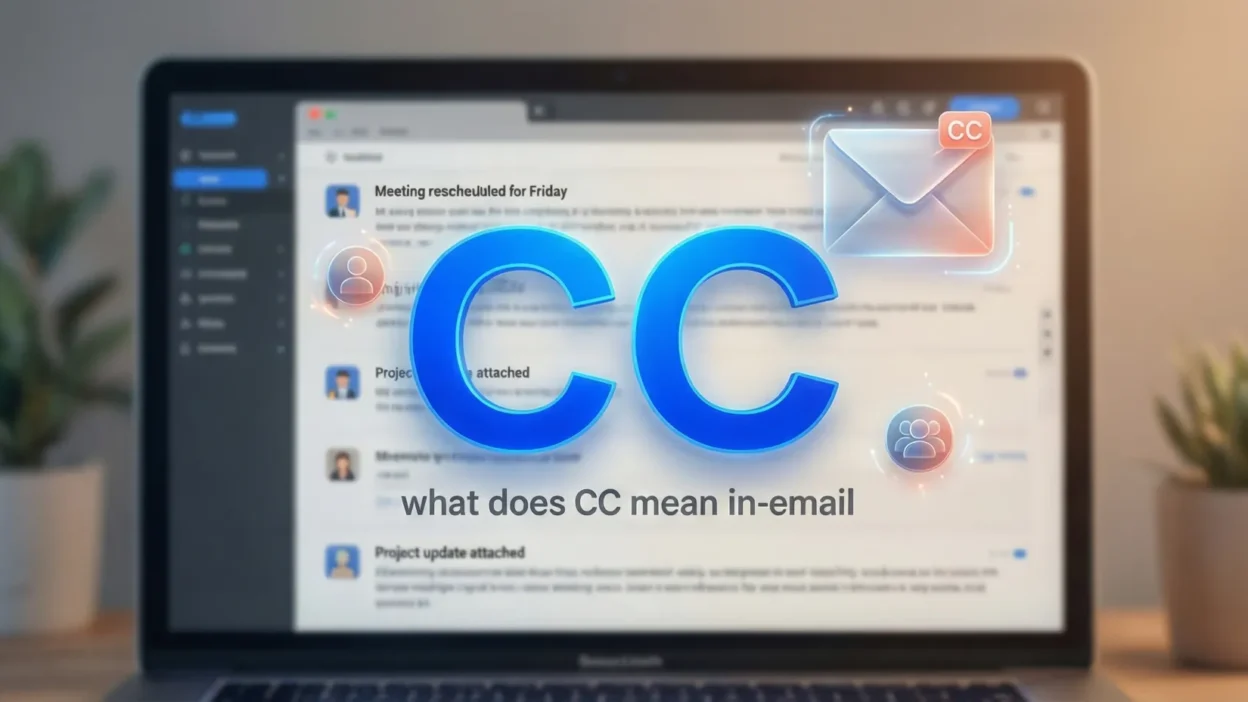
CC means “Carbon Copy.” It’s a formal and polite way of sending someone a copy of an email while letting the main recipient know that others are included in the conversation.
What Does CC Mean in Text? 🧠
CC stands for Carbon Copy. Historically, it comes from the days of typewriters and paper copies, where a carbon sheet was used to create duplicates. In email, CC allows you to send the same message to multiple recipients without making them the primary addressee.
Example Sentence:
“Hi Sarah, I’m sending you the project update. CC’ing John so he’s aware too.”
In short:
CC = Carbon Copy = Sending someone a copy of an email for awareness.
Where Is CC Commonly Used? 📱
CC is widely used in professional and social communication, mainly in email. Here’s where you might see it:
- 📧 Work Emails — Keeping your manager or teammates informed.
- 💼 Client Communications — Ensuring stakeholders know the conversation without being the main responder.
- 🏫 School/University Emails — Teachers CC’ing students’ parents or other staff.
- 🌐 Formal Online Correspondence — Networking, volunteering, or group coordination.
Tone:
Formal, polite, and professional. CC is not casual like texting abbreviations; it’s meant to convey transparency.
Examples of CC in Conversation 💬
Here are some real-life examples of how CC might appear in emails:
Example 1
A: “Can you send me the updated budget?”
B: “Sure! CC’ing Mark so he can approve it too.”
Example 2
A: “I’m done with the report.”
B: “Thanks! CC’ing the team for visibility.”
Example 3
A: “Are we meeting tomorrow?”
B: “Yes, CC’ing the manager to confirm timing.”
Example 4
A: “Please review this draft.”
B: “Done, CC’ing Sarah for her feedback.”
Example 5
A: “Who should I send the proposal to?”
B: “Send it to me and CC the client.”
When to Use and When Not to Use CC 🕓
✅ When to Use CC:
- Keeping people informed without requiring action.
- Sending updates to your team or manager.
- Avoiding miscommunication or repeated emails.
- Sharing information transparently.
❌ When Not to Use CC:
- Sensitive or private information.
- Emails requiring urgent responses.
- When the recipient doesn’t need to know.
- Overloading people with unnecessary emails.
Comparison Table:
| Context | Example Phrase | Why It Works |
|---|---|---|
| Friend Chat | “No rush, CC’ing you for info 😄” | Casual & friendly |
| Work Chat | “Take your time, CC’ing the team” | Polite & professional |
| “Please find attached, CC’ing HR” | Formal & clear |
Similar Slang Words or Alternatives 🔄
Here are some related email terms or alternatives to CC:
| Slang/Term | Meaning | When to Use |
|---|---|---|
| BCC | Blind Carbon Copy – recipient hidden | When privacy is needed |
| FYI | For Your Information | Informal updates to colleagues |
| Reply All | Responds to everyone on the email list | Team-wide discussions |
| To | Primary recipient | Direct recipient of the email |
| Forward | Send email received to others | Sharing info not originally sent |
FAQs About CC ❓
Q1: What’s the difference between CC and BCC?
CC sends a visible copy to other recipients, while BCC keeps the recipients hidden. Use BCC when you want to protect privacy.
Q2: Can CC recipients reply to the email?
Yes, they can. But replies from CC recipients are visible to all unless they choose to reply only to the sender.
Q3: Is CC only for work emails?
No, but it’s most common in formal settings. You can use it for school, client communication, or any email where transparency matters.
Q4: Should I overuse CC?
Avoid overusing CC; only include people who genuinely need to see the email. Too many CC recipients can create confusion or email overload.
Q5: Can CC be used in messaging apps?
Not really. CC is specific to email. Messaging apps have group chats or threads that serve a similar purpose.
Conclusion
CC in email is a simple but powerful tool for keeping everyone in the loop. While it might seem formal at first, understanding when and how to use it can improve your communication significantly.
Remember, CC is about transparency, courtesy, and clarity. Use it wisely to avoid email clutter, and always consider if the recipient truly needs to be included.
If you’re emailing colleagues, clients, or teachers, CC ensures everyone is aware without being the main addressee.
Using CC appropriately shows professionalism and thoughtfulness, helping you maintain effective communication and avoid misunderstandings.
Next time you see CC in your inbox, you’ll know exactly what it means and how to use it confidently.

I’m Leo, the Pun Master behind Punsboxx.com. I turn everyday words into laugh-worthy puns that’ll tickle your brain and brighten your day!