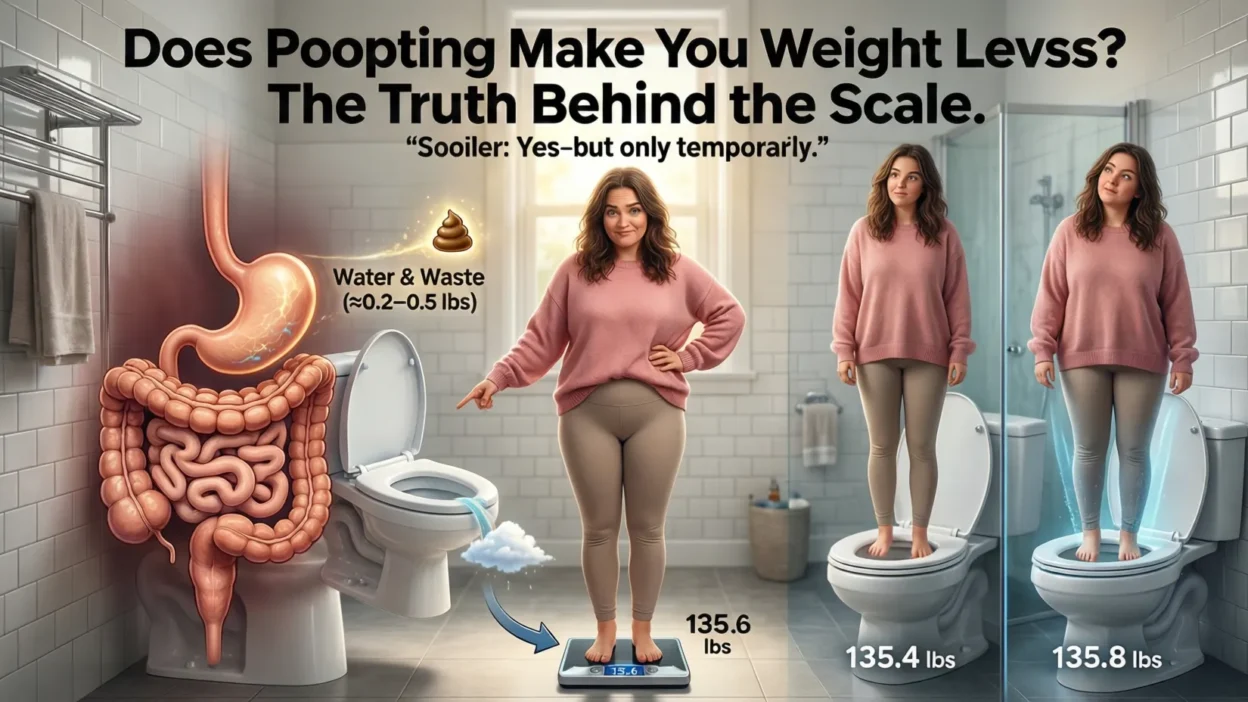
Ever noticed the scale drops after a bathroom trip and wondered if pooping could actually help you lose weight? It’s a question that pops up more often than you might think, especially among people trying to manage their weight.
While it’s true that a bowel movement can make you feel lighter, the change on the scale doesn’t mean you’ve burned fat. Most of the weight lost during a poop comes from water, fiber, and waste material, not your body fat.
Understanding the difference between temporary weight changes and real fat loss is essential for anyone looking to manage their weight effectively. Misinterpreting these fluctuations can lead to frustration or even unhealthy habits, like over-relying on laxatives.
In this article, we’ll break down the science behind digestion, explain what pooping really does to your body weight, and share healthy strategies for achieving sustainable weight loss.
Understanding Weight Loss
Before diving into the connection between pooping and weight loss, it’s important to understand what “weight loss” really means. Many people think any drop on the scale indicates fat loss, but that’s not the case. True weight loss occurs when your body burns stored fat for energy, not when you simply lose water or waste.
Daily weight can fluctuate for many reasons. Hydration levels play a major role drinking a lot of water or consuming salty foods can temporarily increase your weight. Similarly, the food you eat adds bulk, and undigested material in your digestive system can make you feel heavier. Hormones also influence daily weight swings, especially in women during the menstrual cycle.
These factors help explain why the number on the scale may drop after a bowel movement. When you poop, you eliminate waste and water, which can make the scale reflect a lower weight but it doesn’t necessarily mean you’ve lost fat. This distinction is crucial because relying on bathroom visits as a weight loss strategy is not only ineffective but can also lead to unhealthy habits.
Understanding how true fat loss works through calorie deficit, exercise, and metabolism helps set realistic expectations. Pooping might make you feel lighter, but real, lasting weight loss comes from consistent lifestyle choices, not temporary scale fluctuations.
The Science of Pooping
To understand whether pooping makes you lose weight, it helps to know what actually happens in your digestive system. When you eat, your body breaks down food into nutrients like carbohydrates, proteins, and fats, which are absorbed into your bloodstream for energy. What’s left undigested fiber, water, bacteria, and other waste moves through the intestines and eventually exits as stool.
So, when you poop, the weight you lose is primarily waste material and water, not body fat. On average, a bowel movement can weigh anywhere from 100 to 250 grams, depending on diet and hydration. While this can make you feel lighter, it’s important to recognize that it’s a temporary reduction in scale weight, not actual fat loss.
Some people confuse this temporary weight drop with real progress, but fat loss occurs when your body consistently burns more calories than it consumes over time. Even though digestion does burn a small number of calories, the energy used for bowel movements is negligible.
Understanding this science clarifies why relying on bathroom visits for weight loss is ineffective. Instead, a healthy digestive system helps regulate appetite, supports nutrient absorption, and keeps your metabolism running smoothly all of which are important for sustainable weight management.
Myths and Misconceptions
There are many myths surrounding pooping and weight loss, and separating fact from fiction is essential for healthy habits. One common misconception is that pooping burns calories. While digestion does require a small amount of energy, the calories burned during a bowel movement are minimalfar too little to contribute meaningfully to weight loss.
Another myth is that frequent bowel movements automatically lead to weight loss. Some people assume that going to the bathroom multiple times a day will help them shed pounds, but regularity does not equal fat loss. Frequent bowel movements can sometimes be caused by digestive issues, infections, or overuse of laxatives, all of which can be harmful if relied on for “weight management.”
Speaking of laxatives, a third misconception is that they are a safe shortcut to losing weight. While laxatives can temporarily empty the bowels, they do not reduce body fat and can lead to dehydration, electrolyte imbalances, and long-term digestive problems.
It’s also important to understand that scale fluctuations after pooping are temporary and do not reflect actual changes in fat mass. Recognizing these myths helps prevent frustration and unhealthy behaviors. Instead of chasing bathroom-based weight loss, focusing on balanced nutrition, hydration, fiber intake, and physical activity is the proven path to sustainable results.
How Gut Health Influences Weight
While pooping itself doesn’t directly cause fat loss, maintaining a healthy gut can play a significant role in weight management. Your digestive system and gut microbiomethe trillions of bacteria living in your intestines affect how your body processes food, absorbs nutrients, and even regulates appetite. An imbalance in gut bacteria can influence metabolism and, over time, make it harder to lose weight.
One of the most important factors for gut health is fiber intake. High-fiber foods, like vegetables, fruits, whole grains, and legumes, help keep bowel movements regular and improve satiety, meaning you feel full longer. Adequate fiber also feeds healthy gut bacteria, which support digestion and metabolic function.
Hydration is equally important. Water aids in the movement of stool through the intestines, preventing constipation and bloating. Regular physical activity further supports digestion and metabolic efficiency. Stress management and adequate sleep also play a role, as chronic stress can disrupt gut bacteria and affect hormones related to hunger and fat storage.
Ultimately, a healthy gut promotes efficient digestion and regular bowel movements, which can help you feel lighter and more comfortable. While it doesn’t directly burn fat, gut health is a key piece of the puzzle for sustainable weight management and overall well-being.
When to Be Concerned
While changes in bowel movements and short-term weight fluctuations are usually normal, there are situations where they may signal an underlying health issue. Occasional constipation or loose stools can happen due to diet, stress, dehydration, or travel. However, persistent digestive problems should not be ignored.
If you experience chronic diarrhea, ongoing constipation, severe bloating, or abdominal pain, it may indicate digestive disorders such as irritable bowel syndrome (IBS), food intolerances, or infections. Unintentional and unexplained weight lossespecially when paired with frequent bowel movements can also be a red flag and deserves medical attention.
Relying on laxatives to control weight or bowel regularity is another cause for concern. Regular laxative use can lead to dehydration, electrolyte imbalances, and dependency, making natural bowel movements more difficult over time. This behavior may also point to disordered eating patterns that require professional support.
You should consider seeing a healthcare provider if bowel habits change suddenly and persist for several weeks, if there is blood in the stool, or if digestive symptoms interfere with daily life. Addressing these issues early can help prevent complications and support overall health. Remember, healthy digestion supports well-being, but it should never be used as a tool for weight loss.
Practical Takeaways
The key takeaway is simple: pooping does not cause real weight loss, but healthy digestion can support your overall weight management efforts. Seeing a lower number on the scale after a bowel movement is normal, but that change reflects the loss of waste and water, not body fat. Understanding this helps prevent unrealistic expectations and frustration.
Instead of focusing on bathroom-related weight changes, prioritize habits that promote both digestive health and sustainable fat loss. Eating a balanced diet rich in fiber helps regulate bowel movements and keeps you feeling full longer, which can reduce overeating. Foods such as vegetables, fruits, whole grains, and legumes are excellent choices.
Staying properly hydrated is another essential factor. Drinking enough water supports digestion, prevents constipation, and helps your body function efficiently. Regular physical activity also plays a role by improving metabolism and encouraging healthy bowel function.
It’s equally important to avoid unhealthy shortcuts like laxatives or extreme detox methods. These approaches may cause temporary weight changes but can harm your digestive system and overall health in the long run.
By focusing on long-term lifestyle habits, nutrition, movement, hydration, sleep, and stress management you support both a healthy gut and lasting weight loss. Pooping is a sign of a functioning digestive system, not a fat-loss strategy, and keeping that perspective is crucial for real results.
FAQs
Does pooping burn calories?
Pooping itself burns very few calories. While digestion uses some energy, the number of calories burned during a bowel movement is minimal and does not contribute to meaningful weight loss.
How much weight do you lose when you poop?
Most people lose between 100 and 250 grams after a bowel movement. This weight comes from waste and water, not fat, so it is only a temporary change on the scale.
Does diarrhea cause weight loss?
Diarrhea can lead to short-term weight loss due to dehydration and fluid loss, but it is unhealthy and not sustainable. Any weight lost is usually regained once hydration levels return to normal.
Can constipation affect body weight?
Yes, constipation can cause temporary weight gain by retaining waste in the intestines. However, it does not increase body fat and usually resolves with proper hydration and fiber intake.
Do laxatives help with weight loss?
No. Laxatives do not reduce fat and can be dangerous. They may cause dehydration, electrolyte imbalances, and long-term digestive problems if misused.
How often should you poop?
Normal bowel movement frequency varies from person to person, ranging from three times a day to three times a week. Consistency and comfort are more important than frequency.
Conclusion
So, does pooping make you lose weight? The short answer is not in a meaningful or lasting way. While the number on the scale may drop after a bowel movement, that change reflects the loss of waste and water, not body fat. Understanding this distinction is crucial for anyone trying to manage their weight in a healthy and sustainable way.
Weight loss is often misunderstood because daily fluctuations can be misleading. Digestion, hydration, and bowel movements all influence scale weight, but true fat loss happens gradually through consistent lifestyle choices. Relying on bathroom habits, laxatives, or digestive discomfort as a weight-loss strategy can lead to frustration and potential health risks rather than real results.
That said, healthy digestion still matters. A well-functioning gut supports nutrient absorption, appetite control, and overall comfort, which can indirectly help you stay on track with your weight goals. Eating a fiber-rich diet, drinking enough water, staying active, and managing stress all contribute to better digestive health and long-term wellness.
Instead of focusing on short-term scale changes, shift your attention to habits that promote real progress. Celebrate regular digestion as a sign of good health not a fat-burning tool. When weight loss is approached with patience, knowledge, and balance, the results are not only more effective but also far more sustainable.

I’m Leo, the Pun Master behind Punsboxx.com. I turn everyday words into laugh-worthy puns that’ll tickle your brain and brighten your day!