Have you ever been scrolling through Instagram, TikTok, or WhatsApp and suddenly saw someone write “habibi” and thought, “Wait… what does that mean?” 🤔 I remember the first time I saw it;
I had no idea if it was a compliment, a joke, or just random typing. It popped up everywhere from funny memes to heartfelt messages and I quickly realized it wasn’t just some random word.
Quick Answer:
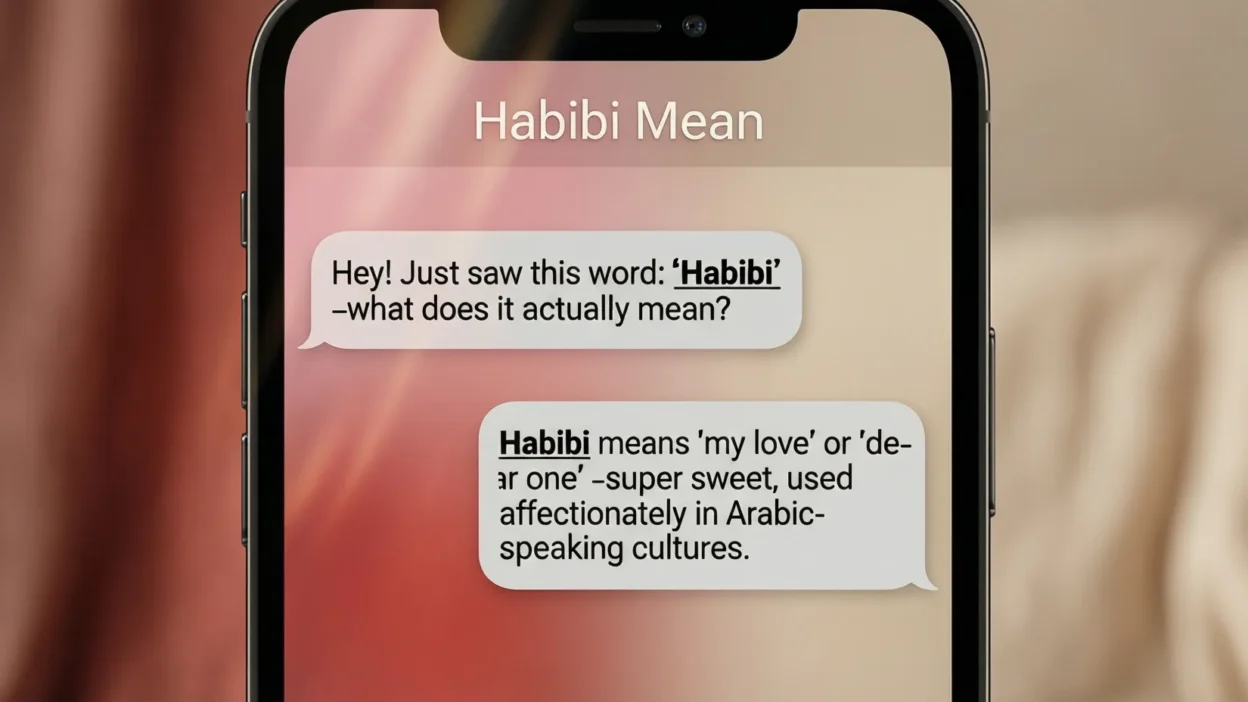
Habibi means “my beloved” or “my dear” in Arabic. It’s a friendly, affectionate, and sometimes flirty way to refer to someone you care about.
What Does Habibi Mean in Text? 🧠
The word “habibi” (حبيبي) comes from Arabic and literally translates to “my love” or “my dear”. It’s used to show warmth, affection, or care toward someone, whether a friend, family member, or romantic partner.
- For guys referring to a guy or girl: habibi
- For girls referring to a guy or girl: habibti
Example:
- A: “Thanks for helping me with my homework 😅”
- B: “No problem, habibi! ❤️”
In short:
Habibi = My beloved / My dear = Friendly, affectionate term for someone you care about.
Where Is Habibi Commonly Used? 📱
Habibi has grown beyond Arabic-speaking countries and is now widely used across social media and texting. Here’s where you might see it:
- Snapchat: Chatting with friends or sending cute stickers 💌
- Instagram / TikTok: Comments under posts or videos 🥰
- WhatsApp / Messenger: Everyday texting with friends, family, or romantic partners 💬
- Gaming Chats: Casual or playful banter 🎮
Tone & Style:
- Mostly casual and friendly
- Can be flirty depending on context 😉
- Not suitable for formal emails or professional chats
Examples of Habibi in Conversation 💬
Here are some realistic texting scenarios using habibi:
- Example
- A: “Can you send me the notes from class?”
- B: “Sure, habibi! I got you 😎”
- Example
- A: “Feeling a bit down today…”
- B: “Aw habibi, don’t worry! I’m here 💛”
- Example
- A: “You’re late again 😂”
- B: “Haha, habibi, traffic was inexplicable😅”
- Example
- A: “Love your new profile pic 😍”
- B: “Thanks, habibi! You’re the sweetest 😘”
- Example
- A: “Wanna grab coffee later?”
- B: “Of course, habibi! ☕❤️”
- Example
- A: “Miss you 😭”
- B: “Miss you too, habibi! Can’t wait to hang out 💕”
- Example
- A: “Good luck on your test!”
- B: “Thanks, habibi! I appreciate it 🙏”
When to Use and When Not to Use Habibi 🕓
Knowing when to use habibi is key to avoiding awkward moments.
✅ When to Use
- Friendly texts to close friends
- Romantic or affectionate messages
- Social media comments or replies
- Playful banter in casual chats
❌ When Not to Use
- Professional emails or workplace chats
- Serious or urgent messages
- Conversations with strangers in formal settings
- Legal, academic, or official communications
Comparison Table:
| Context | Example Phrase | Why It Works |
|---|---|---|
| Friend Chat | “No rush, habibi 😄” | Casual & friendly |
| Work Chat | “Take your time.” | Polite & professional |
| “Please take your time to review this.” | Formal & clear |
Similar Slang Words or Alternatives 🔄
| Slang | Meaning | When to Use |
|---|---|---|
| Bae | Before anyone else / love | Romantic or flirty chats |
| Love | General affection | Friends, family, casual chats |
| Boo | Romantic partner / crush | Flirty or romantic messages |
| Darling | Affectionate nickname | Casual or romantic use |
| Sweetie | Kind or caring nickname | Friends, romantic, family |
| Baby | Term of endearment | Romantic or close relationships |
FAQs About Habibi ❓
1. Is habibi only for romantic relationships?
Not at all! While it can be used romantically, habibi is also common among friends and family. It simply conveys affection, warmth, or closeness, not necessarily romance.
2. What’s the difference between habibi and habibti?
Habibi is used when referring to males, while habibti is used for females. Both mean “my dear” or “my beloved,” and the choice depends on the person you’re addressing.
3. Can I use habibi in professional settings?
It’s best to avoid habibi in professional emails or formal chats. Stick to neutral terms like “colleague,” “team member,” or “friend” for workplace communications.
4. Is habibi formal or casual?
Habibi is casual and friendly. Its tone can be playful, flirty, or affectionate depending on the context, but it’s rarely formal.
5. Where does the word habibi come from?
It originates from Arabic, from the root word “hubb” meaning love. Over time, it became a widely used term of affection across Arabic-speaking countries and beyond.
6. Can I use habibi in texts to someone I just met?
Use caution. Habibi implies closeness or affection, so it’s better reserved for people you know well or want to build a friendly connection with.
Conclusion
In today’s digital world, understanding slang like habibi can make your conversations feel warmer, more relatable, and genuinely affectionate.
If you’re texting friends, replying to Instagram comments, or sending a sweet message to a loved one, habibi adds a touch of intimacy and friendliness. Just remember it’s casual, affectionate, and sometimes flirty, so context matters.
Avoid using it in formal or professional settings, but feel free to sprinkle it in chats to show care and warmth. By understanding the meaning, tone, and correct usage of habibi, you’ll never be confused when it pops up again in your messages.

I’m Leo, the Pun Master behind Punsboxx.com. I turn everyday words into laugh-worthy puns that’ll tickle your brain and brighten your day!