Seeing the word “herpes” pop up can make anyone pause and wonder what it actually looks like. Maybe you’ve noticed a friend Googling it, or you’ve felt a tingle or spot on your skin and started worrying.
Herpes is a common viral infection, and while it can look different depending on the type and stage, knowing the signs helps you identify it early and get proper care.
Quick Answer:
Herpes refers to infections caused by the herpes simplex virus (HSV). It can cause small, painful blisters or sores, usually around the mouth or genital area. While it might look alarming, it’s manageable with treatment.
What Does Herpes Look Like?
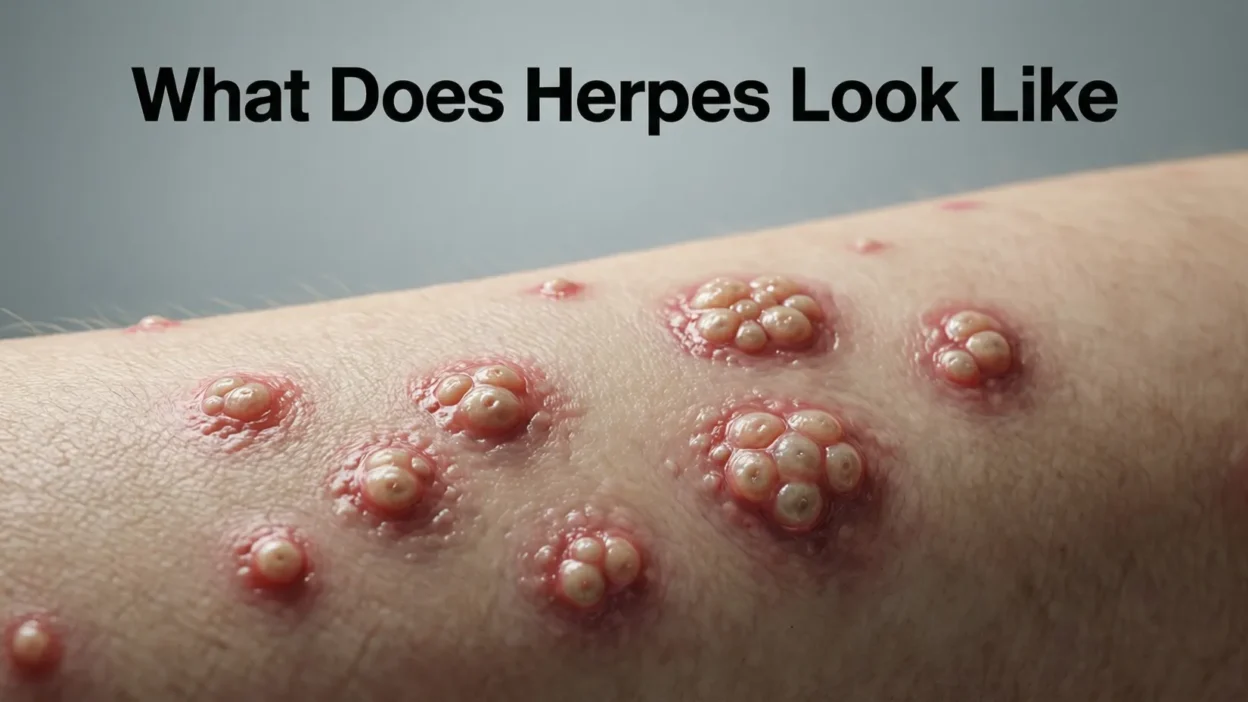
Herpes presents in various ways depending on whether it’s oral (HSV-1) or genital (HSV-2). Common visual signs include:
- Small red bumps: Often the first sign, appearing as tiny raised spots.
- Blisters: These fluid-filled lesions are the classic herpes symptom.
- Open sores: Blisters may break, leaving shallow ulcers that can be painful.
- Crusting: Sores eventually crust over and heal, usually within 2–3 weeks.
- Redness or irritation: Surrounding skin can appear inflamed or tender.
Example:
A tiny, fluid-filled blister on the lip that itches or tingles before it bursts is often oral herpes.
In short:
Herpes = HSV infection = small, painful blisters or sores.
Where Is Herpes Commonly Found? 📍
Herpes can appear in:
- Mouth/lips (oral herpes) 😘
- Genitals or buttocks (genital herpes) 🍑
- Hands or fingers (rare, herpetic whitlow) ✋
- Eyes (very rare, ocular herpes) 👁️
It’s important to note that:
- Herpes is casual/common in many adults.
- It’s not always visible—some carriers show no symptoms.
- Highly contagious when blisters are present.
Examples of How Herpes Appears
Here are realistic descriptions of what herpes may look like:
- Oral Herpes (Cold Sores): Small cluster of blisters on or around the lips, often itchy before they appear.
- Genital Herpes: Red bumps that develop into blisters on the genital area, which can break and form painful sores.
- First Outbreak: Often more severe—multiple blisters, fever, swollen lymph nodes, and discomfort.
- Recurrent Outbreak: Usually milder, fewer blisters, and shorter healing time.
- Healing Stage: Blisters crust over, and redness fades within 1–2 weeks.
When to Notice and When to Seek Help
✅ When to Be Alert:
- Blisters or sores on lips or genitals
- Tingling, itching, or burning sensation before a sore appears
- Painful sores that last more than a few days
❌ When Not to Panic:
- Minor irritation or pimples that aren’t fluid-filled
- Single red spots without blistering
- Skin changes that heal quickly without spreading
| Context | Example Symptom | Why It Matters |
|---|---|---|
| Oral Herpes | Cold sore on lip | Highly contagious, needs care |
| Genital Herpes | Red bumps or blisters | Can transmit to partner |
| Early Stage | Tingling/itching | Early treatment can reduce severity |
| Healing Stage | Crusted sores | Less contagious, indicates recovery |
Similar Conditions or Look-Alikes
| Condition | How It Looks | When to Use/Check |
|---|---|---|
| Pimples/Acne | Whitehead or red bump, not fluid-filled | If sores don’t cluster, not herpes |
| Shingles | Painful, one-sided blister pattern | Usually older adults, follow nerve lines |
| Canker Sores | Small, white/yellow inside mouth | Only inside mouth, not contagious |
| Molluscum | Small, flesh-colored bumps | Usually painless, not herpes |
FAQs About Herpes
Q1: Can herpes be seen immediately after infection?
A: No. Symptoms may take 2–12 days to appear after exposure, and some people never show visible sores.
Q2: Is herpes only oral or genital?
A: While most infections are oral (HSV-1) or genital (HSV-2), it can rarely appear on hands, eyes, or other body parts.
Q3: Are herpes blisters painful?
A: Often, yes. They may tingle, itch, or burn before becoming painful sores.
Q4: How long does a herpes outbreak last?
A: First outbreaks can last 2–3 weeks, while recurrent outbreaks are usually shorter, 3–7 days.
Q5: Can herpes be treated?
A: There’s no cure, but antiviral medications reduce severity, speed healing, and lower transmission risk.
Q6: Can I catch herpes from someone without visible sores?
A: Yes. Herpes can spread even when no symptoms are present, though risk is lower.
Conclusion
Herpes is a common viral infection with distinctive visual signs mostly blisters or sores on the mouth or genital area.
Understanding what herpes looks like helps reduce panic, identify outbreaks early, and seek treatment if needed. Remember, not every bump or red spot is herpes, and only a healthcare professional can confirm a diagnosis.
Being informed, practicing safe hygiene, and consulting a doctor when symptoms appear is the best approach. Early care helps manage outbreaks, reduce discomfort, and prevent spreading the virus to others.

I’m Luca, the voice behind Punsboxx.com, where I create simple, clever puns to make people smile with everyday humor.