Ibuprofen is one of the most commonly used pain relievers among adults, yet many people assume the dosage is the same for everyone. Whether you are dealing with a headache, muscle pain, fever, or inflammation, taking the right amount matters more than most realize. While age-based dosing is common for children, adults often overlook an important factor: body weight.
The truth is, ibuprofen dosage by weight for adults can influence both how effective the medication is and how safe it remains. Taking too little may not relieve pain, while taking too much can increase the risk of stomach irritation, kidney problems, and other side effects. This confusion leads many adults to guess their dose or rely solely on the label.
In this guide, you will learn how ibuprofen works in the adult body, why weight plays a role in dosing, and how to use this medication safely. The goal is to help you make informed, responsible choices without unnecessary risk.
What Is Ibuprofen and How Does It Work?
Ibuprofen is a nonsteroidal anti-inflammatory drug, commonly known as an NSAID. It is widely used by adults to relieve pain, reduce inflammation, and lower fever. You can find it both over the counter and in prescription-strength forms, depending on the dose and intended use.
Ibuprofen works by blocking enzymes called cyclooxygenase, or COX enzymes. These enzymes play a key role in producing prostaglandins, which are chemicals in the body responsible for pain, swelling, and fever. By reducing prostaglandin production, ibuprofen helps calm inflammation and ease discomfort.
Once taken, ibuprofen is absorbed through the stomach and intestines and processed mainly by the liver before being eliminated by the kidneys. This process is influenced by several factors, including body weight, metabolism, hydration, and overall health. In adults, body weight can affect how the drug is distributed throughout the body and how long it stays active.
Because of this, a dose that works well for one adult may be less effective or riskier for another. Understanding how ibuprofen works is the foundation for using weight-based dosing principles safely and effectively.
Standard Ibuprofen Dosage Guidelines for Adults
For most adults, ibuprofen is taken according to general dosage guidelines rather than precise weight-based calculations. Over-the-counter ibuprofen is typically available in lower strengths, while higher doses require a prescription. These standard recommendations are designed to be safe for the majority of adults when used for short-term pain or fever relief.
Adults are usually advised to take ibuprofen in divided doses throughout the day, allowing enough time between each dose to reduce the risk of side effects. Taking more than recommended or shortening the time between doses does not improve pain relief and can significantly increase health risks. The maximum daily limit exists to protect vital organs, especially the stomach and kidneys.
It is also important to understand that these guidelines assume a generally healthy adult. Factors such as body weight, age, hydration level, and overall health can influence how the body responds to ibuprofen. While standard dosing works for many people, it may be less effective for some or potentially unsafe for others.
This is where confusion often begins. Adults who feel inadequate pain relief may be tempted to increase their dose on their own. Understanding standard guidelines is essential before considering whether weight-based dosing may be appropriate or when medical advice is needed.
Why Body Weight Matters When Taking Ibuprofen
Body weight plays an important role in how medications like ibuprofen work in adults, even though dosing is not always calculated strictly by weight. When you take ibuprofen, the drug is distributed throughout your body tissues and bloodstream. A person with a lower body weight may experience stronger effects from the same dose compared to someone who weighs more.
Heavier adults often have a larger volume of distribution, meaning the medication may be diluted more throughout the body. This can sometimes make standard doses feel less effective, especially for inflammation or moderate pain. On the other hand, underweight adults may be more sensitive to typical doses and face a higher risk of side effects.
Weight also influences how quickly ibuprofen is metabolized and eliminated. While liver and kidney function are major factors, body mass can affect how long the drug stays active in the system. This is one reason healthcare providers sometimes consider weight when adjusting doses, particularly for short-term high-dose use.
However, weight is only one part of the picture. Increasing the dose solely based on body weight without guidance can be dangerous. This balance between effectiveness and safety is why understanding weight-related dosing principles is helpful—but should always be approached carefully.
Ibuprofen Dosage by Weight for Adults: General Principles
Unlike children, adults are not usually given ibuprofen doses calculated strictly by body weight. However, healthcare providers do use weight-based principles as a reference when determining safe and effective dosing. This approach is often expressed in milligrams per kilogram, which helps estimate how much medication the body can handle without increasing risk.
In adults, weight-based dosing is more commonly considered when standard doses do not provide adequate relief or when short-term higher doses are medically necessary. For example, a heavier adult may metabolize and distribute ibuprofen differently than a lighter adult, which can affect how well the medication controls pain or inflammation.
That said, weight-based calculations for adults always remain within established safety limits. There is a maximum daily dose that should never be exceeded, regardless of body weight. This upper limit exists to prevent serious complications such as stomach bleeding, kidney damage, and cardiovascular risks.
It is also important to understand that weight-based dosing does not mean taking more medication automatically leads to better results. Pain relief reaches a plateau, while side effects continue to increase with higher doses. For this reason, weight is used as a guiding factor, not a license to exceed recommended limits.
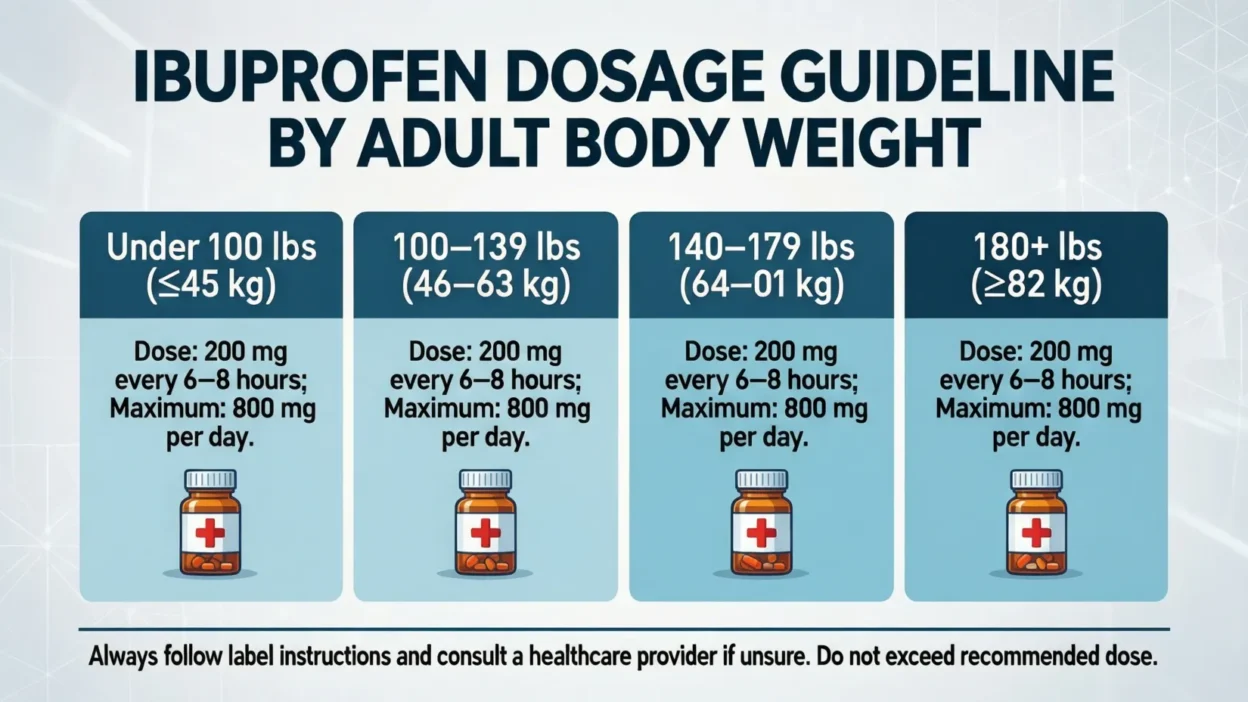
Ibuprofen Dosage Chart by Weight for Adults (How to Use It Safely)
Many adults look for a dosage chart to quickly understand how ibuprofen intake may relate to body weight. While such charts can be helpful for general guidance, they should never replace label instructions or medical advice. A weight-based chart is best used to understand relative dosing, not to justify exceeding safe limits.
These charts typically group adults into weight ranges and show commonly used dose ranges that fall within approved daily maximums. The idea is to demonstrate why a lighter adult may respond well to a lower dose, while a heavier adult may require the upper end of standard dosing for similar pain relief. However, even for heavier adults, increasing the dose beyond recommended limits does not improve effectiveness and greatly increases risk.
When using a dosage chart, it is essential to consider the total daily intake, not just a single dose. Spacing doses properly throughout the day helps maintain pain control while reducing stress on the stomach and kidneys. Charts also assume short-term use for acute pain, not long-term or chronic conditions.
If pain persists despite following chart guidance, the safest next step is to consult a healthcare professional. Self-adjusting doses based on weight alone can be harmful, especially when taken repeatedly over several days.
Maximum Safe Ibuprofen Dosage for Adults
Understanding the maximum safe dosage of ibuprofen is critical, especially when considering weight-based guidance. Regardless of body weight, there is a clear upper limit for how much ibuprofen an adult should take in a single day. Exceeding this limit significantly raises the risk of serious side effects without providing additional pain relief.
Short-term use at appropriate doses is generally well tolerated by healthy adults. Problems tend to arise when higher doses are taken too frequently or for extended periods. The stomach lining is particularly vulnerable, which can lead to irritation, ulcers, or internal bleeding. The kidneys are also at risk, especially if dehydration is present or if ibuprofen is combined with other medications that strain kidney function.
It is important to remember that the maximum daily limit applies to the total amount taken from all doses combined. Taking several smaller doses too close together can be just as dangerous as taking one large dose. Weight does not cancel out these risks.
For adults who feel they need higher or more frequent doses to manage pain, this may be a sign that ibuprofen alone is not the right solution. In such cases, medical guidance is essential to avoid preventable complications and long-term harm.
How Often Can Adults Take Ibuprofen?
Timing between ibuprofen doses is just as important as the amount taken. For adults, ibuprofen is typically taken every 6 to 8 hours, depending on the dose strength and the severity of pain. Taking doses too close together does not increase effectiveness and can significantly raise the risk of side effects, including stomach irritation, kidney strain, and elevated blood pressure.
The total number of doses per day should always stay within the maximum daily limit, even if the pain persists. For short-term pain or fever, following the recommended intervals usually provides effective relief while minimizing risk. For adults using ibuprofen for chronic conditions like arthritis, doctors may adjust timing and dosage but under strict supervision.
It’s also important to consider other factors when scheduling doses. Taking ibuprofen with food or milk can help protect the stomach lining, while staying hydrated supports kidney function. Avoid combining ibuprofen with other NSAIDs, unless instructed by a healthcare provider, to prevent accidental overdose.
Ultimately, consistency and moderation are key. Even if body weight suggests a higher dose may be needed, the safest approach is to adhere to recommended intervals and limits, and consult a doctor if standard dosing doesn’t control pain effectively.
Factors That Affect Ibuprofen Dosage in Adults
While body weight is an important consideration, several other factors influence how adults should take ibuprofen safely and effectively. Age is one factor; older adults may be more sensitive to NSAIDs due to changes in kidney and liver function, even if they weigh more. Similarly, metabolic rate affects how quickly the drug is processed and eliminated from the body.
Health conditions also play a critical role. Adults with kidney or liver disease, heart problems, high blood pressure, or gastrointestinal issues need extra caution. Taking ibuprofen in these cases may require lower doses or alternative medications. Hydration status is another factor; dehydration can increase the risk of kidney damage when taking NSAIDs.
The type and severity of pain matter as well. Acute pain, such as a headache or injury, may require short-term dosing, while chronic pain might need carefully monitored repeated doses. Lifestyle factors, like alcohol consumption, can amplify side effects, particularly on the stomach and liver.
Even with weight-based guidance, these variables mean that dosing cannot rely on weight alone. For safe and effective ibuprofen use, adults should consider their overall health, activity level, and pain type, and consult a healthcare professional when in doubt.
Frequently Asked Questions
Is ibuprofen dosage based on weight for adults?
Unlike children, adults usually follow standard dosing guidelines. Weight is considered in some cases, but dosing is generally capped at a maximum daily limit for safety.
Can heavier adults take more ibuprofen?
Heavier adults may sometimes need doses at the higher end of the standard range, but exceeding the recommended maximum is dangerous. Always follow label instructions or doctor guidance.
How much ibuprofen is safe per day for adults?
For most healthy adults, the maximum daily limit is typically 1,200–3,200 mg, depending on whether it’s over-the-counter or prescription strength. Exceeding this can cause serious side effects.
How often can adults take ibuprofen?
Ibuprofen is usually taken every 6–8 hours. Shortening the interval does not improve effectiveness and increases risk.
Can I take ibuprofen for multiple days in a row?
Short-term use is safe for most adults. Long-term or daily use should only be done under medical supervision to avoid kidney, stomach, or heart problems.
What should I do if I accidentally take too much?
Seek medical attention immediately. Signs of overdose include nausea, vomiting, stomach pain, dizziness, or unusual bleeding.
Conclusion
Understanding ibuprofen dosage by weight is an important part of using this common pain reliever safely and effectively. While adults do not usually require strict weight-based dosing like children, body weight can influence how the medication is absorbed and how effective it is. Heavier adults may sometimes respond better to the upper end of standard doses, while lighter adults may need caution to avoid side effects.
Equally important is staying within the maximum daily limits and spacing doses correctly, usually every 6–8 hours. Overdosing or taking doses too close together can lead to serious health issues, including stomach irritation, kidney damage, and increased cardiovascular risk. Factors such as age, health conditions, hydration, and the type of pain being treated also affect how ibuprofen should be used.
Always take ibuprofen with food or water to protect your stomach, and avoid combining it with other NSAIDs unless advised by a doctor. If standard dosing does not relieve pain, consult a healthcare professional rather than self-adjusting.
By following these principles, adults can safely benefit from ibuprofen’s pain-relieving and anti-inflammatory effects while minimizing risks. Weight-based considerations are helpful guidance, but safety and medical advice should always come first.

I’m Elijah, the mind behind Punsboxx.com. As a true Pun Master, I love twisting words into clever laughs and serving fresh humor that never goes out of style!