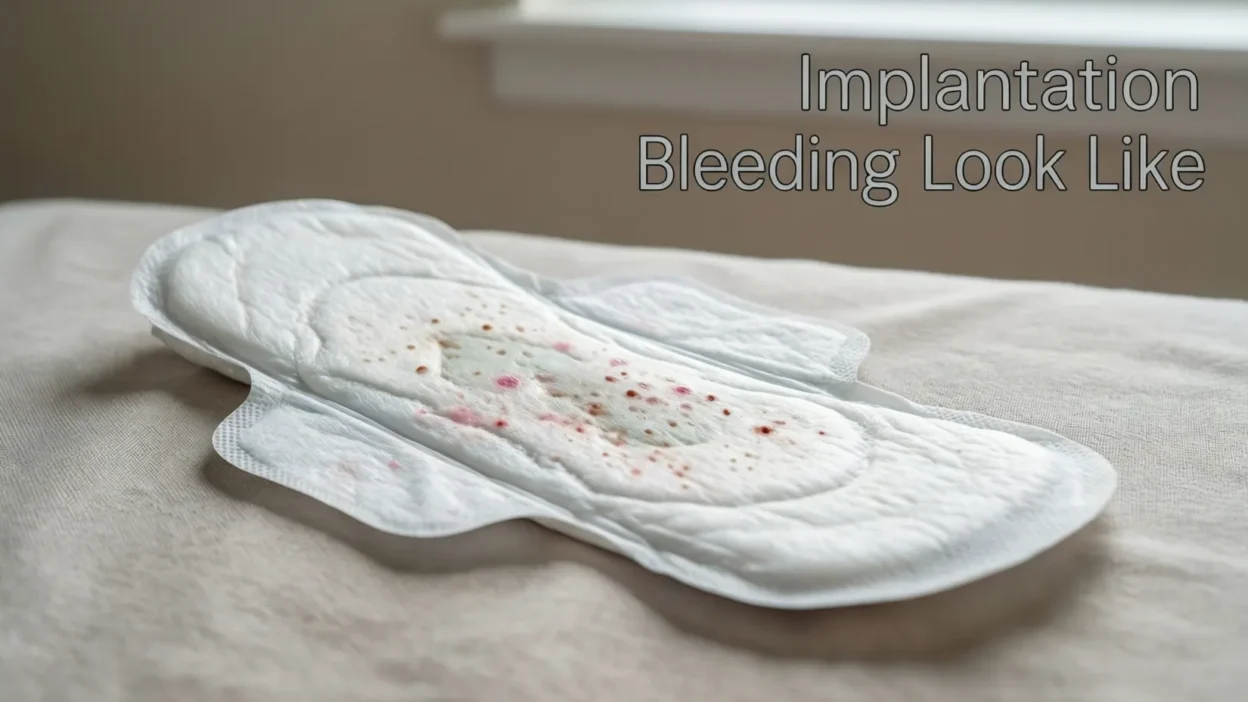
If you’ve noticed light spotting and immediately thought, “Is this my period… or something else?”—you’re not alone.
Many people first hear about implantation bleeding when they’re actively trying to conceive or suddenly notice unexpected spotting. It can feel confusing, emotional, and even a little scary at first.
The good news is that implantation bleeding is usually harmless and, in some cases, an early sign of pregnancy.
Understanding what implantation bleeding looks like, when it happens, and how it differs from a period can help you feel more confident and less anxious about what your body is doing.
Quick answer:
Implantation bleeding usually looks like light spotting, often pink or brown, and lasts a few hours to two days—much lighter than a normal period.
What Is Implantation Bleeding?
Implantation bleeding happens when a fertilized egg attaches itself to the lining of the uterus. This process can cause small blood vessels in the uterine wall to break, leading to light bleeding or spotting.
This typically occurs 6–12 days after ovulation, often before your expected period. Not everyone experiences implantation bleeding, but for those who do, it can be one of the earliest physical signs of pregnancy.
In simple terms:
Implantation bleeding = light spotting caused by a fertilized egg settling into the uterus.
What Does Implantation Bleeding Look Like?
Implantation bleeding is usually very different from a regular period. Here’s what most people notice:
Common appearance
- 🌸 Color: Light pink, pale red, or brown
- 🌸 Flow: Very light — spotting, not a full flow
- 🌸 Texture: Thin, watery, or slightly sticky
- 🌸 Amount: Just a few drops or light streaks
You may only notice it:
- When wiping after using the bathroom
- As light spots on underwear
- For a few hours or up to two days
What it usually does NOT look like
- ❌ Bright red heavy bleeding
- ❌ Blood clots
- ❌ Soaking pads or tampons
- ❌ Bleeding that increases over time
In short:
Implantation bleeding looks like light pink or brown spotting, not a real period.
Implantation Bleeding vs Period: Key Differences
| Feature | Implantation Bleeding | Period |
|---|---|---|
| Color | Pink or brown | Bright red or dark red |
| Flow | Very light spotting | Medium to heavy |
| Duration | Few hours to 2 days | 3–7 days |
| Clots | None | Common |
| Timing | Before expected period | On or after expected date |
| Cramps | Mild or none | Moderate to strong |
If bleeding feels like your usual period, it’s probably not implantation bleeding.
When Does Implantation Bleeding Happen?
Implantation bleeding usually occurs:
- 🕒 6–12 days after ovulation
- 🕒 7–10 days before your next period
- 🕒 Around week 3–4 of pregnancy
Because timing overlaps with when a period should start, many people confuse implantation bleeding with an early or light period.
How Long Does Implantation Bleeding Last?
Most cases last:
- ⏳ A few hours
- ⏳ Up to 1–2 days
If bleeding lasts longer than 3 days or becomes heavier, it’s more likely related to your period or another cause.
Does Implantation Bleeding Come With Cramps?
Sometimes, yes—but they’re usually:
- Mild
- Short-lived
- More like pressure than pain
Severe cramping is not typical for implantation bleeding and should be checked by a healthcare professional.
Can Implantation Bleeding Be Heavy?
No. Implantation bleeding is never heavy.
If you need a pad or tampon, see clots, or notice increasing flow, it is not implantation bleeding.
Can Everyone Experience Implantation Bleeding?
No. Many healthy pregnancies happen without any implantation bleeding at all.
Experiencing it:
- ✔️ Does NOT confirm pregnancy
- ❌ Does NOT rule pregnancy out if absent
A pregnancy test is the only reliable way to confirm pregnancy.
When Should You Take a Pregnancy Test?
For best accuracy:
- 🧪 Wait 3–5 days after implantation bleeding
- 🧪 Or wait until after your missed period
Testing too early can give a false negative.
When to See a Doctor
Seek medical advice if:
- Bleeding is heavy or painful
- Bleeding lasts longer than 3 days
- You feel dizzy or weak
- You have severe abdominal pain
These symptoms may indicate something other than implantation bleeding.
FAQs About Implantation Bleeding
Is implantation bleeding a sure sign of pregnancy?
No. It can be an early sign, but not everyone experiences it.
Can implantation bleeding be bright red?
Rarely. It’s usually pink or brown.
Can implantation bleeding happen after a positive test?
No. It happens before pregnancy hormones rise enough to show on a test.
Can stress cause implantation bleeding?
Stress doesn’t cause implantation bleeding, but it can affect cycle timing.
Conclusion
Implantation bleeding can be surprising, especially if you’re not expecting it. Remember, it’s usually light, brief, and painless, and very different from a regular period.
While it can be an early sign of pregnancy, the absence of implantation bleeding doesn’t mean anything is wrong.
Every body is different. If you’re unsure or worried, listening to your body and consulting a healthcare provider is always the safest step.

I’m Luca, the voice behind Punsboxx.com, where I create simple, clever puns to make people smile with everyday humor.