The first time most people hear the word lice, it’s usually followed by instant panic.
Maybe your child came home scratching their head, or you felt an itchy scalp and started Googling at midnight, zooming into blurry photos online.
The confusion is real — lice are tiny, fast, and easy to miss if you don’t know exactly what you’re looking for.
Quick Answer:
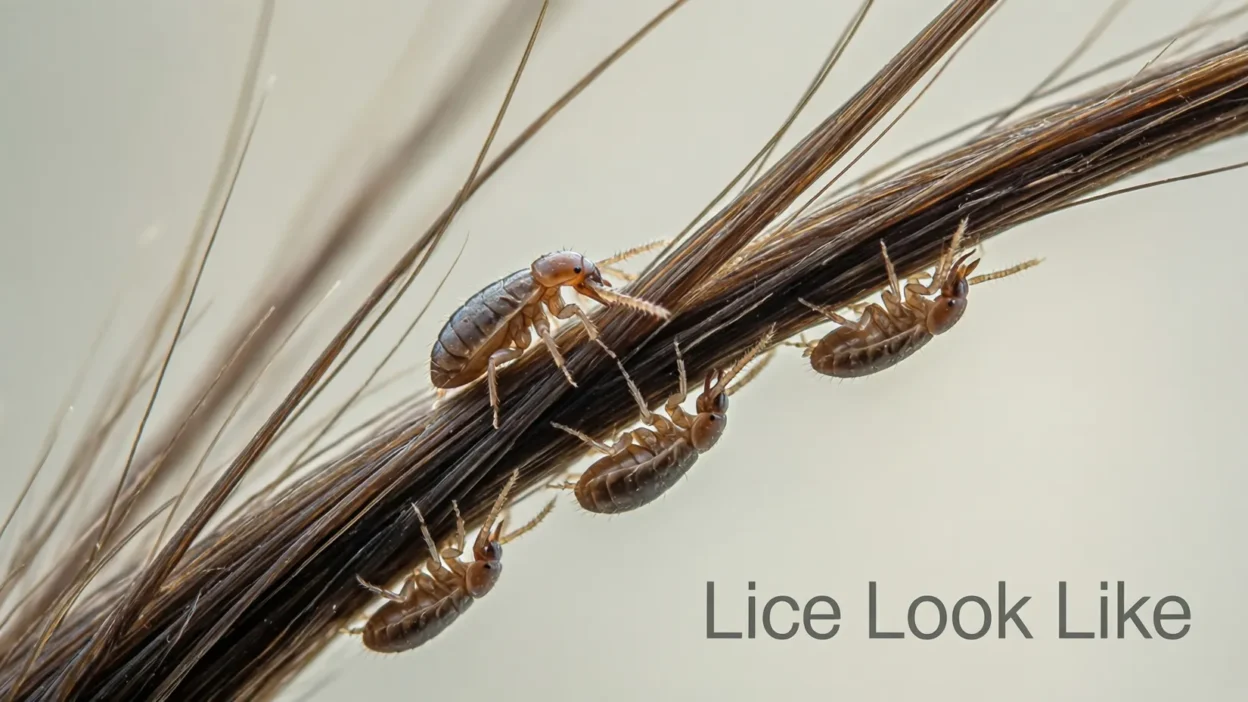
Lice are tiny, wingless insects about the size of a sesame seed. They are tan, gray, or brown, crawl quickly through hair, and live close to the scalp where they feed on blood.
🧠 What Does Lice Look Like?
Lice are very small parasitic insects that live on the human scalp. Adult lice are usually 2–4 mm long, making them hard to spot with the naked eye.
Here’s what they typically look like:
- Flat, oval-shaped bodies
- Six tiny legs with claw-like grips
- Tan, grayish-white, or brown color
- No wings and cannot jump or fly
Lice move fast, especially when exposed to light, which is why people often miss them during quick checks.
In short:
Lice = tiny crawling insects = sesame-seed sized bugs living near the scalp
📱 Where Is Lice Most Commonly Found?
Lice don’t live everywhere on the body — they prefer specific warm areas.
Most common places:
- 🧠 Scalp (especially behind ears)
- 🧵 Hair near the neckline
- 👂 Behind the ears
- 🪮 Close to the roots, not the hair tips
Important notes:
- Lice do not live on pillows or furniture long-term
- They survive best on human heads
- They spread through direct head-to-head contact
Lice infestations are common, not dirty, and mostly affect children.
💬 What Do Lice Eggs (Nits) Look Like?
Many people confuse lice with nits, but they are different.
Nits (lice eggs):
- Oval-shaped and extremely small
- Yellow, white, or tan in color
- Firmly attached to hair shafts
- Located close to the scalp
- Do not flake off like dandruff
Nits are often mistaken for dandruff — but dandruff slides easily, while nits stay stuck.
🕓 When to Check for Lice and When Not to Panic
✅ When to Check:
- Persistent scalp itching
- Red bumps or sores on scalp
- Tickling feeling in hair
- Known exposure at school or daycare
❌ When Not to Panic:
- Mild itching only
- Dry scalp flakes
- No visible bugs or nits after thorough checking
Comparison Table
| Situation | What You See | What It Means |
|---|---|---|
| Moving bug | Fast, brown insect | Active lice |
| White flakes | Fall off easily | Dandruff |
| Oval dots | Stuck to hair | Nits |
| Red scalp | Scratching | Possible irritation |
🔄 Lice vs Dandruff vs Fleas (Quick Comparison)
| Condition | Appearance | Movement | Where Found |
|---|---|---|---|
| Lice | Small brown bugs | Crawl fast | Scalp |
| Nits | Oval white/yellow | Don’t move | Hair shafts |
| Dandruff | White flakes | Fall off | Scalp |
| Fleas | Dark jumping insects | Jump | Skin/clothes |
❓ FAQs About What Does Lice Look Like
Are lice visible to the naked eye?
Yes, adult lice can be seen, but they’re very small and move quickly, making them easy to miss.
Do lice look black?
No. Lice are usually tan, gray, or light brown, not black.
Can lice live in clean hair?
Yes. Lice prefer clean hair because it’s easier to grip.
Do lice fly or jump?
No. Lice crawl only and spread through direct contact.
Are lice more common in kids?
Yes. School-aged children are the most commonly affected.
Conclusion
Finding out you or your child might have lice can feel stressful, but understanding what lice actually look like removes much of the fear.
Lice are tiny, wingless insects that live close to the scalp, blend into hair color, and move quickly which is why they’re often missed at first. Their eggs, called nits, are even easier to confuse with dandruff but stay firmly attached to hair strands.
The key takeaway is simple: lice are common, manageable, and not a sign of poor hygiene. Knowing the visual differences between lice, nits, dandruff, and other scalp conditions helps you act quickly and correctly.
Early detection makes treatment easier and prevents spreading. With the right information and calm action, lice are a temporary issue — not a permanent problem.

I’m Elijah, the mind behind Punsboxx.com. As a true Pun Master, I love twisting words into clever laughs and serving fresh humor that never goes out of style!