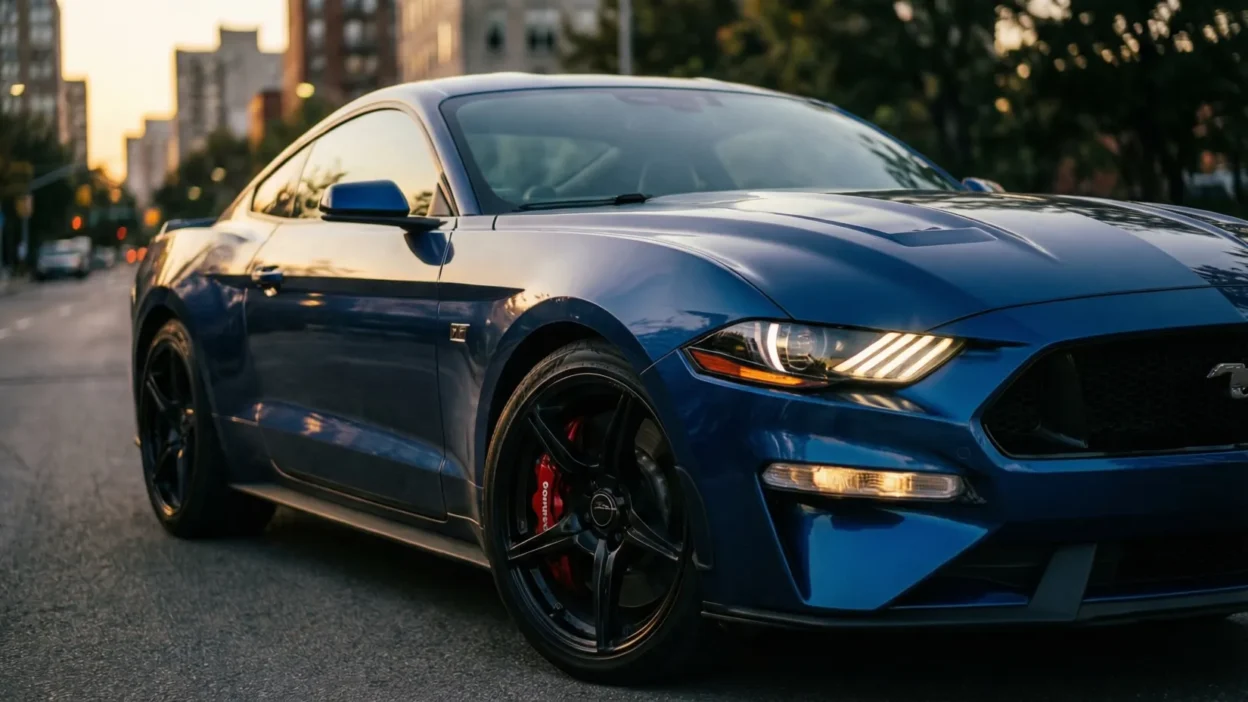
When people think of the Ford Mustang GT, horsepower and sound usually come first — but weight plays an equally important role in how this iconic muscle car performs. Whether you’re comparing model years, choosing between a manual or automatic, or deciding if the Mustang GT is right for track use or daily driving, understanding Mustang GT weight is essential.
So, how much does a Mustang GT weigh? The answer depends on the generation, body style, and configuration. Over the years, the Mustang GT has gained weight due to added safety features, stronger chassis design, and modern technology — yet it has also become faster and more capable than ever.
In this guide, we’ll break down Mustang GT curb weight by year, explain why weight varies across trims, and show how weight affects acceleration, handling, and braking. By the end, you’ll know exactly how Mustang GT weight impacts real-world performance — and whether it truly matters for your driving goals.
What “Weight” Really Means: Curb, Dry, and Gross Weight Explained
Before comparing Mustang GT models, it’s important to understand what vehicle weight actually refers to, because not all weight measurements mean the same thing. The most commonly cited figure — and the one buyers should focus on — is curb weight.
Curb weight is the weight of the vehicle with all standard equipment, fluids (oil, coolant, fuel), and a full tank of gas, but without passengers or cargo. When people ask, “How much does a Mustang GT weigh?” they are almost always referring to curb weight.
Dry weight, on the other hand, excludes fluids and fuel. While this number may look more impressive on paper, it’s rarely used in real-world performance discussions because it doesn’t reflect how the car is actually driven. Ford does not emphasize dry weight for the Mustang GT, making curb weight the more accurate and practical metric.
There’s also GVWR (Gross Vehicle Weight Rating), which represents the maximum safe operating weight of the vehicle, including passengers and cargo. While GVWR is important for safety and load limits, it’s not useful when comparing performance between different Mustang GT models.
For performance analysis — acceleration, handling, braking, and power-to-weight ratio — curb weight is the most relevant measurement. It allows accurate comparisons between generations, trims, and competitors. Throughout this article, all Mustang GT weight figures are based on curb weight unless otherwise stated, ensuring consistent and realistic comparisons across years and configurations.
Mustang GT Weight by Generation: How It Has Changed Over Time
The weight of the Mustang GT has evolved significantly over the past two decades, reflecting changes in design philosophy, safety regulations, and performance technology. While early Mustang GT models were lighter and simpler, newer generations balance increased weight with improved power, handling, and refinement.
In the mid-2000s, Mustang GT models prioritized traditional muscle car proportions with relatively minimal technology. As a result, these cars featured lower curb weights, especially in coupe and manual configurations. However, they lacked many of the safety systems and chassis advancements found in modern performance cars.
Starting in the mid-2010s, Ford introduced major structural and mechanical upgrades. Independent rear suspension, reinforced chassis components, and improved crash safety standards contributed to a noticeable weight increase. At the same time, Ford offset some of this gain by using aluminum body panels, which helped keep weight growth under control.
The most recent Mustang GT generation continues this trend. Advanced infotainment systems, digital displays, driver-assistance features, and stricter emissions equipment all add mass. Despite this, modern Mustang GT models deliver better acceleration, braking, and handling than earlier versions due to increased horsepower, improved suspension tuning, and more sophisticated electronics.
Understanding Mustang GT weight by generation is essential for buyers and enthusiasts. Lighter models often appeal to purists and track builders, while heavier modern versions offer superior comfort, safety, and all-around performance. In the sections that follow, we’ll break down each Mustang GT generation in detail, including exact curb weight ranges, body style differences, and how specific design changes influenced overall weight.
S197 Mustang GT Weight (2005–2014)
The S197 Mustang GT, produced from 2005 to 2014, represents a return to classic muscle car styling paired with modern engineering for its time. Compared to newer generations, the S197 is often considered one of the lighter and more mechanically straightforward Mustang GT platforms.
Early S197 Mustang GT models, particularly from 2005 to 2009, featured curb weights that were relatively modest by modern standards. Coupe models with a manual transmission were the lightest configurations, while automatic transmissions and convertible body styles added noticeable mass. The solid rear axle used in most S197 GTs also contributed to a simpler, lighter setup compared to later independent rear suspension designs.
From 2010 to 2014, the S197 Mustang GT gained weight due to several key updates. The introduction of the 5.0L Coyote V8 in 2011 brought increased power but also added structural and cooling components. Additional safety features, upgraded interiors, and improved sound insulation further increased curb weight in later years.
Despite these increases, the S197 Mustang GT remains appealing to performance enthusiasts because of its favorable power-to-weight ratio, mechanical simplicity, and strong aftermarket support. Many track and drag racing builds favor this generation due to its lighter baseline weight and ease of modification.
Overall, the S197 Mustang GT strikes a balance between old-school muscle car character and modern performance. Its relatively lower weight compared to newer generations makes it an attractive option for drivers focused on raw performance, aggressive acceleration, and hands-on driving engagement.
S550 Mustang GT Weight (2015–2023)
The S550 Mustang GT, produced from 2015 to 2023, marked one of the most significant engineering shifts in Mustang history. While this generation is heavier than the S197, the added weight comes with substantial gains in handling, ride quality, and overall performance capability.
One of the biggest changes was the introduction of an independent rear suspension (IRS), which improved cornering stability and ride comfort but also increased curb weight. To offset this, Ford incorporated aluminum body panels, including the hood and front fenders, helping prevent excessive weight gain compared to earlier solid-axle designs.
Throughout the S550 generation, Mustang GT weight varied depending on configuration. Manual transmission coupe models remained the lightest, while automatic transmissions — especially the later 10-speed automatic — added extra mass. Convertible versions were the heaviest due to structural reinforcements and roof mechanisms.
Performance-focused trims such as the GT Performance Pack added weight through larger brakes, wider wheels, additional cooling components, and upgraded suspension hardware. However, these additions significantly improved braking performance, grip, and track endurance, making the extra weight worthwhile for many drivers.
Despite weighing more than previous generations, the S550 Mustang GT benefited from increased horsepower, improved aerodynamics, and refined chassis tuning. As a result, it delivered faster lap times and better real-world performance than lighter, older models.
For enthusiasts seeking a balance between modern comfort and performance, the S550 Mustang GT represents a sweet spot — offering advanced technology and handling without excessive weight compared to the newest generation.
S650 Mustang GT Weight (2024–Present)
The S650 Mustang GT, introduced for the 2024 model year, continues Ford’s approach of blending modern technology with traditional V8 performance. While it builds on the S550 platform, the S650 features extensive updates that result in a slight increase in overall weight compared to its predecessor.
One of the biggest contributors to the S650 Mustang GT’s weight is its expanded use of advanced technology. Dual digital displays, enhanced infotainment systems, and additional driver-assistance features add mass but significantly improve the driving experience and interior refinement. Structural reinforcements to meet updated safety and crash standards also contribute to the higher curb weight.
Despite these additions, Ford made efforts to manage weight through material choices and chassis optimization. Aluminum components remain part of the design, helping prevent excessive gains. The result is a Mustang GT that is heavier on paper but more rigid and dynamically capable in real-world driving.
Performance-oriented variants, such as the Mustang Dark Horse, introduce further weight increases due to upgraded cooling systems, wider tires, larger brakes, and reinforced drivetrain components. However, these enhancements allow the car to handle increased power and sustained track use more effectively.
While some enthusiasts criticize the S650 Mustang GT for being heavier than earlier generations, the added weight supports improved stability, safety, and performance consistency. For most drivers, the benefits of modern engineering outweigh the drawbacks, making the S650 a refined yet aggressive evolution of the Mustang GT lineage.
Mustang GT Weight by Trim and Configuration
Beyond generation changes, Mustang GT weight varies significantly based on trim level and optional equipment. Two cars from the same model year can differ by hundreds of pounds depending on how they are configured, making trim selection an important factor for buyers focused on performance.
The base Mustang GT is typically the lightest version, especially when paired with a manual transmission and minimal options. In contrast, the GT Premium adds weight through upgraded interior materials, larger infotainment screens, premium audio systems, powered seats, and additional comfort features. While these options enhance daily drivability, they also increase curb weight.
Performance-focused packages also influence Mustang GT weight. The Performance Pack adds larger brakes, wider wheels and tires, additional cooling hardware, and stiffer suspension components. These upgrades add mass but dramatically improve handling, braking consistency, and track durability. For enthusiasts who plan to push their car hard, the performance gains often outweigh the extra weight.
Optional features such as MagneRide adaptive suspension, larger wheel sizes, and active exhaust systems further increase weight. Even small choices, like wheel material and brake size, can have a noticeable impact — particularly on unsprung weight, which affects ride quality and responsiveness.
Convertible models are consistently the heaviest Mustang GT configuration due to chassis reinforcements and the folding roof mechanism. While they sacrifice some performance potential, they offer a unique open-top driving experience many owners find worthwhile.
Ultimately, Mustang GT weight is not a fixed number but a result of choices. Understanding how trims and options affect curb weight helps buyers select a configuration that best matches their performance, comfort, and driving priorities.
Manual vs Automatic: How Transmission Choice Affects Mustang GT Weight
Transmission choice plays a surprisingly important role in Mustang GT weight, and it also influences how that weight is felt behind the wheel. Across all generations, manual transmission Mustang GT models are generally lighter than their automatic counterparts.
Traditional 6-speed manual transmissions are mechanically simpler, using fewer internal components and no torque converter. This simplicity results in a lower curb weight and a more direct connection between the engine and drivetrain. For drivers focused on maximum engagement and a slightly better power-to-weight ratio, the manual remains the lighter option.
Automatic Mustang GT models, particularly those equipped with Ford’s 10-speed automatic transmission, add extra weight due to their complex internal gearing, hydraulic systems, and cooling requirements. While this increases curb weight, it also delivers benefits such as quicker shift times, improved consistency, and often faster real-world acceleration.
The weight difference between manual and automatic Mustang GT models typically ranges from 50 to over 100 pounds, depending on the generation and configuration. While this may not seem dramatic on paper, it can affect handling balance, braking, and fuel efficiency — especially in track-focused scenarios.
Despite the added weight, many drivers prefer the automatic for daily driving and drag racing due to its smooth operation and optimized gear ratios. In contrast, purists and track enthusiasts often favor the manual for its lighter weight, driver involvement, and simplicity.
Ultimately, the decision comes down to driving priorities. While the manual offers a slight weight advantage, the automatic’s performance benefits can easily offset its extra mass in many real-world situations.
Coupe vs Convertible: Understanding the Weight Difference
Body style has one of the largest impacts on Mustang GT weight, with convertibles consistently weighing more than coupe models. This difference is not simply due to the folding roof, but to the extensive structural changes required to maintain safety and rigidity without a fixed roof.
Coupe models benefit from a solid roof structure that contributes to overall chassis stiffness. As a result, they require fewer reinforcements, keeping curb weight lower and handling more precise. For drivers focused on performance, especially track use, the coupe remains the preferred option due to its lighter weight and sharper response.
Convertible Mustang GT models must compensate for the loss of the roof by adding reinforced frame rails, additional bracing, and strengthened pillars. The power-operated soft top or hard top mechanism further increases weight. In total, convertibles can weigh 200 to 300 pounds more than comparable coupe models.
This added weight affects more than straight-line acceleration. Convertibles typically exhibit slightly reduced handling precision, longer braking distances, and increased body flex under aggressive driving. However, modern engineering has minimized these drawbacks, making current Mustang GT convertibles far more capable than older open-top designs.
Despite the performance penalty, many buyers gladly accept the extra weight in exchange for the open-air driving experience. For daily driving and cruising, the difference is far less noticeable, especially in automatic configurations.
Ultimately, choosing between a coupe and convertible comes down to priorities. If performance, weight, and handling are critical, the coupe is the clear winner. If driving enjoyment and style matter more, the convertible’s added weight may be a worthwhile trade-off.
How Mustang GT Weight Affects Performance
Weight plays a critical role in how the Mustang GT performs, influencing acceleration, handling, braking, and overall driving feel. While horsepower figures often grab attention, it’s the relationship between power and weight that truly determines real-world performance.
In terms of acceleration, a lighter Mustang GT benefits from a better power-to-weight ratio, allowing it to reach higher speeds more quickly. Heavier configurations — such as automatics, convertibles, or fully loaded trims — may feel slightly slower off the line, even if engine output remains the same. That said, modern transmissions and traction control systems help offset some of this disadvantage.
Handling and cornering are also directly affected by weight. Increased mass places greater demand on suspension components and tires, reducing agility and increasing body roll. This is especially noticeable on track, where lighter Mustang GT models respond more quickly to steering inputs and maintain better balance through corners. Weight distribution also matters, as excessive front-end weight can lead to understeer.
Braking performance is another area where weight matters. Heavier vehicles require more force to slow down, increasing stopping distances and brake wear. This is why performance packages with larger brakes are especially valuable on heavier Mustang GT configurations.
Despite these challenges, added weight isn’t always negative. Modern Mustang GTs use their mass to improve stability at high speeds and deliver a more planted, confidence-inspiring driving experience. The key is balance — and Ford has consistently increased power and technology to ensure performance continues to improve, even as weight increases.
Mustang GT Weight vs Key Competitors
To fully understand Mustang GT weight, it helps to compare it with its closest rivals. The most common comparisons are the Chevrolet Camaro SS and the Dodge Challenger R/T, two performance cars that take very different approaches to size, weight, and driving dynamics.
The Camaro SS is generally the lightest of the three. Its smaller footprint, lower roofline, and aggressive use of lightweight materials allow it to undercut the Mustang GT in curb weight. This weight advantage contributes to sharp handling and strong track performance, often making the Camaro feel more agile in corners.
The Dodge Challenger R/T, by contrast, is significantly heavier. Built on a larger platform with a focus on straight-line performance and interior space, the Challenger carries more mass than both the Mustang GT and Camaro SS. While this weight impacts handling and braking, it enhances highway stability and ride comfort.
The Mustang GT sits squarely in the middle. It balances weight, power, and usability, offering a blend of agility and comfort that appeals to a broad range of drivers. While not the lightest, it avoids the excessive bulk of the Challenger while providing more interior space and daily usability than the Camaro.
These weight differences reflect each manufacturer’s philosophy. The Camaro prioritizes track capability, the Challenger emphasizes classic muscle car presence, and the Mustang GT strikes a versatile balance. For buyers, understanding these distinctions helps clarify which performance car best aligns with their driving style and priorities.
Why Newer Mustang GTs Are Heavier
Many enthusiasts notice that newer Mustang GT models weigh more than older versions, and this increase isn’t accidental. The added weight is largely the result of evolving safety standards, technology advancements, and consumer expectations.
One major factor is safety regulation compliance. Modern crash standards require stronger structures, additional airbags, reinforced door beams, and improved crumple zones. These components add weight but significantly increase occupant protection compared to earlier generations.
Technology also plays a major role. Features such as digital instrument clusters, larger infotainment systems, premium audio setups, advanced climate control, and driver-assistance systems all contribute to higher curb weight. While these systems improve comfort and usability, they weren’t present on older, lighter Mustang GT models.
Another contributor is emissions and fuel-efficiency equipment. Modern vehicles require more complex exhaust systems, catalytic converters, and sensors to meet environmental regulations. These additions increase weight but allow the Mustang GT to remain street-legal while delivering strong V8 performance.
Chassis rigidity has also improved. Newer Mustang GTs use stronger materials and additional bracing to enhance handling precision and reduce body flex. Although this adds mass, it results in better stability, sharper steering response, and improved ride quality.
While the increased weight may concern purists, it reflects a trade-off. Modern Mustang GTs are safer, more refined, and more capable across a wider range of driving conditions. The challenge for Ford has been balancing this weight gain with increased power — a balance it has largely achieved.
Can You Reduce Mustang GT Weight? Realistic Options
For enthusiasts focused on performance, reducing Mustang GT weight is a common goal. While it’s unrealistic to remove hundreds of pounds without extreme modifications, there are practical ways to shed weight without sacrificing reliability or safety.
One of the most effective upgrades is lightweight wheels. Reducing unsprung and rotational mass improves acceleration, braking, and steering response more noticeably than removing the same amount of weight elsewhere. Many aftermarket wheel options can save significant weight compared to factory setups.
Another popular option is an aftermarket exhaust system. Lighter materials such as stainless steel or titanium can reduce weight while improving exhaust flow and sound. This modification offers a solid balance of performance benefit and daily usability.
Interior changes can also contribute. Swapping factory seats for lightweight performance seats removes a noticeable amount of weight, though this may reduce comfort for daily driving. Similarly, replacing the factory battery with a lightweight lithium or AGM battery can provide modest weight savings.
However, not all weight reduction strategies are recommended for street-driven cars. Removing sound deadening, airbags, or safety components can compromise comfort and protection. These changes are best reserved for dedicated track vehicles.
Ultimately, weight reduction should be approached strategically. Small reductions in key areas can enhance performance without hurting drivability. For most Mustang GT owners, focusing on unsprung weight and drivetrain efficiency offers the best return without turning the car into an impractical daily driver.
Lightest Mustang GT Years: Best Choices for Performance Builds
Not all Mustang GTs are created equal when it comes to weight, and some model years stand out as particularly attractive for performance-focused builds. Identifying the lightest Mustang GT years can help buyers and enthusiasts choose a platform that delivers strong performance with minimal compromise.
Among modern Mustangs, early S197 GT models (2005–2009) are often regarded as some of the lightest V8-equipped Mustang GTs. These cars lack many of the advanced safety systems and infotainment features found in newer generations, keeping curb weight relatively low — especially in manual coupe form.
Later S197 models (2011–2014) gained some weight due to the introduction of the 5.0L Coyote engine and additional features, but they remain competitive thanks to their excellent power-to-weight ratio. Many drag racing and street performance builds favor these years for their balance of weight, power, and affordability.
Early S550 Mustang GT models (2015–2017) also deserve consideration. Aluminum body panels help offset the added mass of independent rear suspension, making these cars lighter than later S550 refresh models that added more technology and equipment.
In contrast, the newest Mustang GT models are heavier but offer superior chassis rigidity and refinement. While not ideal for extreme weight-sensitive builds, they excel in daily drivability and track consistency.
Ultimately, the best year depends on your goals. For maximum performance potential with minimal weight, early S197 and early S550 GT models offer the best foundation. For drivers prioritizing modern features and safety, accepting extra weight may be a worthwhile trade-off
rankings and capture “People Also Ask” queries:
Frequently Asked Questions About Mustang GT Weight
How much does a Mustang GT weigh on average?
The average Mustang GT curb weight typically falls between 3,700 and 4,000 pounds, depending on the generation, body style, transmission, and trim level. Coupe models with manual transmissions are usually the lightest, while convertibles and fully loaded trims are the heaviest.
Does Mustang GT weight affect fuel economy?
Yes. Heavier Mustang GT models generally consume more fuel, especially in city driving. Increased weight requires more energy to accelerate and stop, which can slightly reduce MPG compared to lighter configurations.
Is the Mustang GT heavier than older models?
Modern Mustang GTs are heavier than earlier generations due to added safety features, technology, and structural improvements. However, they are also significantly more powerful and refined, offsetting the performance impact of added weight.
Which Mustang GT is the lightest?
Early S197 Mustang GT models (2005–2009) are among the lightest V8-equipped GTs. Early S550 models (2015–2017) are also relatively light thanks to aluminum body panels.
Does weight affect Mustang GT performance on the track?
Absolutely. Lower weight improves acceleration, braking, tire wear, and cornering response. Track-focused drivers often prefer lighter configurations or invest in weight reduction upgrades to improve lap times.
Can weight reduction noticeably improve performance?
Yes, especially when reducing unsprung or rotational weight. Lightweight wheels, brakes, and exhaust systems can deliver noticeable gains without sacrificing daily drivability.
Is the Mustang GT Too Heavy? Final Verdict
So, is the Mustang GT too heavy? The answer depends entirely on how you plan to use the car. While modern Mustang GT models are undeniably heavier than their predecessors, weight alone doesn’t tell the full performance story.
For track-focused enthusiasts, lighter Mustang GT generations and configurations offer clear advantages in agility, braking, and responsiveness. In these scenarios, weight matters, and choosing a manual coupe with fewer options can make a noticeable difference. However, even heavier modern Mustang GTs remain highly competitive thanks to increased horsepower, advanced suspension systems, and refined chassis tuning.
For daily driving, the added weight of newer Mustang GT models often works in the driver’s favor. Improved ride quality, cabin insulation, safety features, and stability make modern Mustangs more comfortable and confidence-inspiring in real-world conditions. Most drivers will never fully exploit the limits where weight becomes a disadvantage.
It’s also important to remember that Ford has consistently increased performance alongside weight. Each new generation delivers faster acceleration, better braking, and improved handling despite higher curb weight figures. This balance ensures the Mustang GT remains a serious performance car rather than simply a numbers exercise.
Ultimately, Mustang GT weight is best viewed as a trade-off, not a flaw. Whether you prioritize raw performance, modern refinement, or everyday usability, there’s a Mustang GT configuration that fits your needs. Understanding how weight affects performance allows you to make an informed choice — and enjoy everything this iconic V8-powered car has to offer.

I’m Leo, the Pun Master behind Punsboxx.com. I turn everyday words into laugh-worthy puns that’ll tickle your brain and brighten your day!