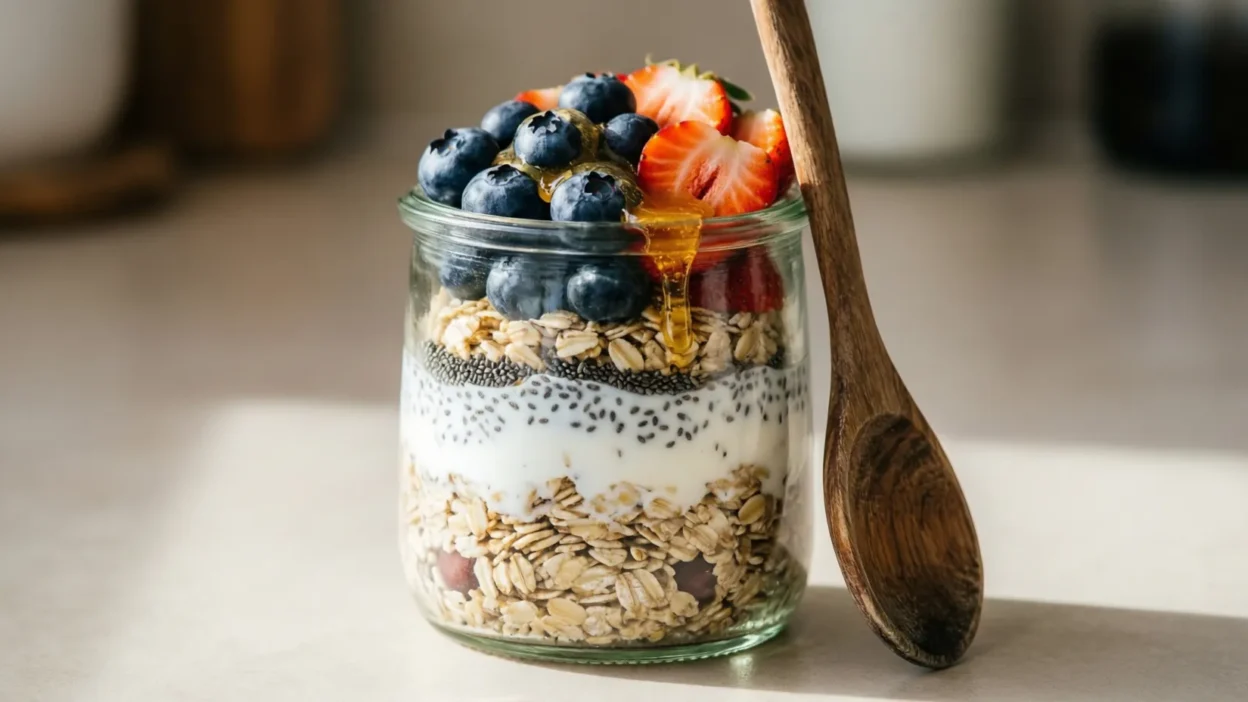
Losing weight often starts with one simple habit: eating the right breakfast. Yet for many people, busy mornings lead to skipped meals or quick, high-calorie options that don’t keep hunger away for long. This is where overnight oats for weight loss come in. Easy to prepare, nutrient-dense, and endlessly customizable, overnight oats have become a popular choice for those looking to lose weight without giving up satisfying meals.
Made by soaking rolled oats in milk or yogurt overnight, this no-cook breakfast delivers a powerful combination of fiber, protein, and slow-digesting carbohydrates. These nutrients work together to keep you full, stabilize blood sugar levels, and reduce unhealthy snacking throughout the day. But are overnight oats really good for weight loss, or can they actually slow your progress if prepared incorrectly?
In this complete guide, you’ll learn how overnight oats support weight loss, the best ingredients to use, common mistakes to avoid, and simple recipes that fit perfectly into a healthy, sustainable weight-loss plan.
What Are Overnight Oats?
Overnight oats are a simple, no-cook version of traditional oatmeal made by soaking rolled oats in liquid for several hours—usually overnight—until they soften and are ready to eat. Instead of cooking oats on the stove or in the microwave, time does the work for you. By morning, the oats absorb the liquid, creating a creamy, pudding-like texture that’s both filling and easy to digest.
The basic formula for overnight oats includes rolled oats, a liquid such as milk or a plant-based alternative, and optional additions like yogurt, seeds, or fruit. Rolled oats are the best choice because they soften well without becoming mushy, while instant oats tend to turn soggy and steel-cut oats often remain too firm unless pre-soaked longer.
What makes overnight oats especially appealing for weight loss is how soaking affects the oats. The process helps break down starches and phytic acid, which can improve digestion and nutrient absorption for some people. Overnight oats are also highly customizable, making it easy to control calories, boost protein, and increase fiber based on your goals.
Because they can be prepared in advance and stored in the fridge for several days, overnight oats are an ideal make-ahead breakfast for busy mornings—supporting consistency, which is one of the most important factors in successful weight loss.
Can Overnight Oats Help With Weight Loss?
Yes, overnight oats can support weight loss when they are prepared with the right ingredients and eaten in proper portions. The key reason they work is that they help you stay full for longer, which makes it easier to maintain a calorie deficit—the foundation of weight loss.
Overnight oats are rich in soluble fiber, especially beta-glucan, which slows digestion and delays stomach emptying. This means you feel satisfied for hours after eating, reducing the urge to snack between meals or overeat later in the day. When paired with protein sources like Greek yogurt or protein powder, overnight oats become even more effective at controlling hunger and supporting muscle maintenance during weight loss.
Another benefit is blood sugar control. Unlike sugary breakfasts, overnight oats release energy slowly, helping prevent spikes and crashes that often lead to cravings. This makes them a smart choice for people trying to manage appetite and energy levels throughout the day.
However, overnight oats are not automatically a weight-loss food. Large portions, excess sweeteners, or calorie-dense toppings like nut butters can quickly increase calorie intake. When prepared mindfully, overnight oats are a sustainable, satisfying, and practical breakfast that can absolutely fit into a long-term weight-loss plan.
Nutritional Profile of Overnight Oats
Overnight oats offer a balanced nutritional profile that makes them well suited for weight loss when prepared correctly. At their core, oats are a source of complex carbohydrates, which provide steady energy without the rapid blood sugar spikes associated with refined carbs. This slow digestion helps reduce hunger and supports better appetite control throughout the day.
One of the most important nutrients in overnight oats is fiber. A single serving of rolled oats contains a significant amount of soluble fiber, particularly beta-glucan, which has been shown to increase feelings of fullness and reduce overall calorie intake. Fiber also supports gut health, which plays a growing role in weight management and metabolism.
Protein is another critical component. While oats contain some protein naturally, adding ingredients like Greek yogurt, milk, or protein powder significantly increases the protein content. Higher-protein breakfasts are associated with improved satiety and reduced cravings later in the day. Healthy fats from ingredients such as chia seeds or flaxseeds further slow digestion and enhance fullness.
In addition to macronutrients, overnight oats provide key micronutrients including magnesium, iron, zinc, and B vitamins. These nutrients support energy production and metabolic function, helping your body work more efficiently as you pursue your weight-loss goals.
The Science Behind Oats and Weight Loss
The effectiveness of overnight oats for weight loss is supported by well-established nutrition science. One of the key factors is their high content of soluble fiber, particularly beta-glucan. This type of fiber forms a gel-like substance in the digestive tract, which slows digestion and increases the release of satiety hormones such as peptide YY. As a result, hunger is reduced and calorie intake throughout the day may naturally decrease.
Oats also help regulate blood sugar levels. Because they are a low to moderate glycemic carbohydrate, oats release glucose slowly into the bloodstream. This steady release prevents sharp insulin spikes and crashes, which are often linked to increased fat storage and cravings. More stable blood sugar makes it easier to stick to a calorie-controlled eating plan.
When protein is added to overnight oats—through Greek yogurt, milk, or protein powder—the thermic effect of food increases. Protein requires more energy to digest than carbohydrates or fats, slightly boosting calorie burn while also helping preserve lean muscle mass during weight loss.
Additionally, oats may positively influence gut bacteria. A healthier gut microbiome has been associated with improved metabolism and better weight regulation, making overnight oats a smart choice for long-term, sustainable weight loss.
Best Ingredients for Weight-Loss Overnight Oats
Choosing the right ingredients is essential for turning overnight oats into a weight-loss-friendly meal. The foundation should always be rolled oats, as they provide the best texture, fiber content, and slow digestion. Avoid instant oats, which are more processed and less filling.
For the liquid base, opt for unsweetened almond milk, low-fat dairy milk, or water to keep calories under control. Adding Greek yogurt is highly recommended because it significantly boosts protein, helping you feel full longer and supporting muscle maintenance during weight loss. Plant-based yogurts can work as well, but choose unsweetened versions with higher protein content.
To enhance satiety and nutritional value, include small amounts of chia seeds or ground flaxseeds. These add fiber, omega-3 fatty acids, and healthy fats that slow digestion. When it comes to fruit, focus on low-sugar options like berries or chopped apples, which add sweetness, volume, and antioxidants without excess calories.
Flavorings such as cinnamon, vanilla extract, or unsweetened cocoa powder can improve taste without added sugar. If additional sweetness is needed, use minimal amounts of natural sweeteners like honey or maple syrup. By carefully selecting ingredients, overnight oats become a balanced, satisfying meal that supports consistent and sustainable weight loss.
Ingredients to Avoid or Limit
While overnight oats can be a powerful tool for weight loss, certain ingredients can quickly turn them into a high-calorie, sugar-heavy meal. One of the biggest mistakes is adding excess sweeteners. Honey, maple syrup, agave, and brown sugar may seem healthy, but even small amounts can significantly increase calorie intake and spike blood sugar levels.
Flavored yogurts are another common issue. Many contain added sugars that rival desserts, undermining the appetite-control benefits of overnight oats. Always choose plain, unsweetened yogurt and add your own flavor with fruit or spices. Similarly, sweetened plant-based milks can add unnecessary sugar and calories compared to their unsweetened counterparts.
Portion control is especially important with nut butters, nuts, and seeds. While they provide healthy fats, they are calorie-dense and easy to overuse. Stick to measured servings to avoid unintentionally overeating. Granola, chocolate chips, and dried fruits should also be limited or avoided, as they are high in sugar and low in satiety relative to their calorie content.
Lastly, avoid turning overnight oats into a dessert-style meal. When loaded with multiple high-calorie toppings, oats can stall weight loss progress. Keeping ingredients simple and intentional ensures your overnight oats remain a supportive, effective part of a weight-loss plan.
Portion Control: The Key to Weight Loss
Even the healthiest foods can slow weight loss if portions are too large, and overnight oats are no exception. Because oats are calorie-dense, eating oversized servings can easily push you out of a calorie deficit. For most people aiming to lose weight, the ideal base portion is ½ cup of dry rolled oats, which typically provides enough fiber and energy without excessive calories.
Portion balance matters just as much as oat quantity. Pairing oats with ¼ cup of Greek yogurt and ½ cup of unsweetened milk creates a filling meal with a good protein-to-carb ratio. Add-ins like chia seeds, nuts, or nut butter should be limited to 1 tablespoon or less, as these ingredients are high in calories despite their health benefits.
Fruit portions also deserve attention. A small handful of berries or half an apple is usually sufficient to add flavor and volume without adding too much sugar. Using measuring cups at first can help train your eye and prevent accidental overeating.
Individual needs may vary based on factors like activity level, body size, and goals. However, maintaining consistent portions makes tracking easier and results more predictable. When portion sizes are controlled, overnight oats can be a reliable, satisfying meal that supports steady and sustainable weight loss.
How to Make Overnight Oats for Weight Loss (Step-by-Step)
Making overnight oats for weight loss is simple, but using the right method ensures the best texture and nutritional balance. Start with a clean jar or container that has a lid. Add ½ cup of rolled oats as the base. This portion provides enough fiber and energy without excessive calories.
Next, pour in ½ cup of unsweetened milk or water. Almond milk and low-fat dairy milk are popular options because they keep calories low while adding creaminess. For protein, mix in ¼ cup of plain Greek yogurt or a scoop of protein powder. This step is essential for improving satiety and preventing hunger later in the day.
Stir the mixture thoroughly to prevent clumps, then add optional ingredients such as 1 tablespoon of chia seeds, cinnamon, or a small portion of fruit. Once everything is combined, seal the container and refrigerate it for at least 6–8 hours, allowing the oats to soften and absorb the liquid.
By morning, the oats should have a thick, creamy consistency. You can eat them cold or gently warm them if preferred. Prepared properly, overnight oats become a convenient, balanced breakfast that supports weight loss and fits easily into a busy routine.
Best Overnight Oats Recipes for Weight Loss
Having a few reliable recipes makes it easier to stay consistent with healthy eating. The key to weight-loss-friendly overnight oats is keeping them balanced, high in protein, and moderate in calories. One simple option is high-protein berry overnight oats. Combine rolled oats, unsweetened almond milk, Greek yogurt, chia seeds, and a handful of mixed berries for a filling, antioxidant-rich breakfast.
Another effective choice is apple cinnamon overnight oats. Use diced apple, cinnamon, and a touch of vanilla extract to create natural sweetness without added sugar. This version is especially satisfying and works well for cooler mornings. For those who enjoy chocolate, a low-calorie chocolate overnight oats recipe made with unsweetened cocoa powder and a protein boost can satisfy cravings while staying within calorie goals.
Vegan or dairy-free options can also support weight loss when done correctly. Use unsweetened plant-based milk, plant protein powder, and seeds to maintain adequate protein and fiber. Regardless of the recipe, consistency is crucial—avoid overloading oats with toppings.
Rotating flavors throughout the week prevents boredom and reduces the temptation to stray from your plan. When prepared thoughtfully, overnight oats recipes can be both enjoyable and effective for long-term weight loss.
Frequently Asked Questions (FAQs)
Are overnight oats good for belly fat?
Overnight oats do not specifically target belly fat, as spot reduction is not possible. However, their high fiber and protein content can help reduce overall body fat by improving satiety and supporting a calorie deficit, which may eventually lead to a reduction in abdominal fat.
Can I eat overnight oats every day and still lose weight?
Yes, you can eat overnight oats daily as long as your portions and ingredients align with your calorie and protein goals. Many people find them convenient and easy to stick with, which supports long-term weight loss consistency.
Are overnight oats fattening?
Overnight oats themselves are not fattening. Weight gain usually occurs when portions are too large or when high-calorie ingredients like sweeteners, nut butters, or granola are added excessively.
Can I eat overnight oats at night?
Overnight oats can be eaten at night if they fit into your daily calorie intake. Their fiber content may help control late-night hunger, though some people prefer them earlier in the day for digestion comfort.
How long do overnight oats last in the fridge?
When stored in an airtight container, overnight oats typically last 3 to 5 days in the refrigerator. For best texture and freshness, add fruit closer to the day you plan to eat them.
Conclusion
Overnight oats can be a simple yet powerful addition to a weight-loss plan when prepared thoughtfully. Their combination of fiber, protein, and slow-digesting carbohydrates helps control hunger, stabilize blood sugar levels, and reduce unnecessary snacking throughout the day. Just as importantly, they are easy to prepare, affordable, and flexible enough to fit a wide range of dietary preferences.
The key to success lies in the details. Using rolled oats, choosing unsweetened liquids, adding a reliable protein source, and keeping portions in check ensures that overnight oats support a calorie deficit rather than work against it. Avoiding excessive sweeteners and calorie-dense toppings helps maintain their weight-loss benefits.
While overnight oats are not a magic solution, they are a sustainable habit that can make healthy eating more consistent—one of the most important factors in long-term weight loss. When combined with balanced meals, regular movement, and patience, overnight oats can play a meaningful role in helping you reach and maintain your weight-loss goals.
If you’re looking for a convenient breakfast that doesn’t sacrifice nutrition or satisfaction, overnight oats are a practical choice worth including in your routine.

I’m Elijah, the mind behind Punsboxx.com. As a true Pun Master, I love twisting words into clever laughs and serving fresh humor that never goes out of style!