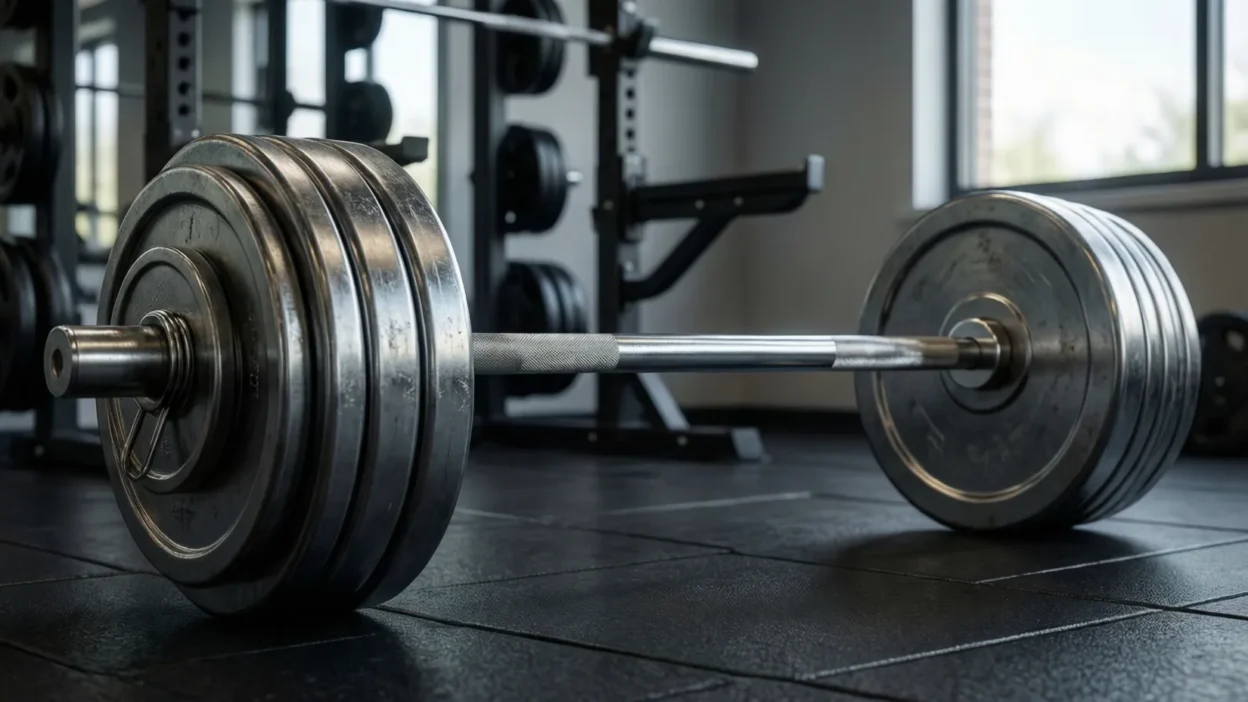
When people ask about standard barbell weight, they’re usually looking for a simple answer: how much does a barbell actually weigh? Walk into most commercial gyms and the assumption is easy the bar is 45 pounds. But in reality, not all barbells are created equal, and that assumption can lead to inaccurate training logs, miscalculated personal records, and confusion when switching gyms or setting up a home workout space.
The term standard barbell is often used loosely to describe different types of bars, including Olympic barbells, non Olympic “standard” bars, women’s training bars, and specialty bars. Each has its own specifications, weight, and purpose. Knowing the exact weight of the bar you’re lifting is essential for tracking progress, programming workouts, and choosing the right equipment for your goals.
In this guide, we’ll break down every type of barbell, explain industry standards, and show you how to identify the weight of any bar you encounter so you never have to guess again.
What Does “Standard Barbell” Actually Mean?
The phrase “standard barbell” is one of the most misunderstood terms in strength training. Unlike something rigidly defined, its meaning changes depending on the setting, the equipment manufacturer, and even the lifter using it. For most people training in commercial gyms, a standard barbell refers to the familiar Olympic bar that weighs 45 pounds (20 kilograms). This assumption is usually correct—but not always.
From an industry perspective, the true “standard” is the Olympic barbell, which follows specifications set by organizations such as the International Weightlifting Federation (IWF). These standards define not only the bar’s weight, but also its length, shaft diameter, sleeve size, and load tolerance. However, outside of competitive lifting environments, the word standard is often used more casually.
In home gyms and beginner weight sets, standard barbell frequently describes non-Olympic barbells with 1-inch sleeves. These bars are shorter, lighter, and designed for basic training rather than heavy lifting. Their weights can vary widely, commonly ranging from 15 to 25 pounds, which is far from the 45-pound gym bar many lifters expect.
This overlap in terminology is the root of much confusion. Two bars can both be labeled “standard” while weighing dramatically different amounts. That’s why understanding context—where you’re training and what type of bar you’re using—is essential. In the sections that follow, we’ll clearly separate Olympic, non-Olympic, and specialty barbells so you always know exactly what weight you’re lifting.
Men’s Olympic Barbell: The True Gym Standard
When lifters refer to the standard barbell weight in a commercial gym, they are almost always talking about the men’s Olympic barbell. This bar is the most widely used piece of strength equipment in the world and follows strict international specifications. The official weight of a men’s Olympic barbell is 20 kilograms, which equals 45 pounds.
Beyond its weight, the men’s Olympic barbell is designed for versatility and durability. It measures approximately 7.2 feet (2.2 meters) in length and features 2-inch (50 mm) rotating sleeves that accommodate Olympic plates. The shaft diameter is typically 28 mm, providing a balance between strength, flexibility, and grip comfort. These design features make the bar suitable for everything from squats and deadlifts to bench presses and Olympic lifts.
Most commercial gyms use Olympic barbells because they can safely handle heavy loads—often rated for 1,000 pounds or more—and withstand years of daily use. While competition-grade bars are manufactured with tight weight tolerances, gym bars may vary slightly, usually within a fraction of a pound. Still, they are close enough that lifters universally treat them as a 45 lb bar.
Because of its consistency and widespread adoption, the men’s Olympic barbell has effectively become the modern definition of a “standard” barbell. If you’re training in a typical gym and unsure of the bar’s weight, assuming 45 pounds is usually safe—though verifying is always best practice for precise tracking.
Women’s Olympic Barbell: A Different Standard
While the men’s Olympic barbell is the most common in commercial gyms, the women’s Olympic barbell is also a recognized industry standard with its own specifications. This bar is designed to better suit smaller hands, lighter body weights, and Olympic lifting technique, while still maintaining the durability required for serious training. The official weight of a women’s Olympic barbell is 15 kilograms, or approximately 33 pounds.
The most noticeable difference is the shaft diameter, which measures 25 mm compared to the 28 mm men’s bar. This smaller diameter allows for a more secure grip, especially during Olympic lifts like the snatch and clean. The women’s bar is also slightly shorter in length but still uses 2-inch Olympic sleeves, making it fully compatible with standard Olympic plates found in most gyms.
Women’s Olympic barbells are commonly used in CrossFit gyms, Olympic weightlifting facilities, and increasingly in commercial gyms. Despite this, many lifters are unaware of the weight difference and mistakenly log lifts as if the bar weighed 45 pounds. Over time, this can significantly distort training records and perceived progress.
It’s important to note that women’s bars are not exclusively for female lifters. Many men prefer them for technical lifts, high-repetition workouts, or movements that benefit from a thinner grip. Understanding when you’re using a 15 kg bar instead of a 20 kg bar ensures accurate load tracking and smarter programming. As more gyms carry multiple bar types, recognizing these differences becomes essential rather than optional.
Technique, Training, and Youth Olympic Bars
In addition to standard men’s and women’s Olympic barbells, many gyms carry technique, training, or youth Olympic bars. These bars are designed to help beginners learn proper movement patterns or allow experienced lifters to practice technique without heavy loading. While they look similar to full-size Olympic bars, their weights are significantly lighter.
Technique bars commonly weigh 5 kg, 10 kg, or 15 kg, depending on the model and intended use. They maintain the same 2-inch sleeve diameter as standard Olympic bars, making them compatible with regular Olympic plates. This consistency allows new lifters to transition smoothly to heavier bars as their strength and confidence improve.
Training and youth bars are often shorter in length and have reduced load capacities. They are ideal for beginners, adolescents, rehabilitation work, or warm-up sets where full bar weight would be excessive. In CrossFit gyms, these bars are frequently used for skill development, high-volume workouts, or mobility-focused sessions.
A common mistake is assuming these lighter bars weigh the same as a standard 45 lb bar simply because they use Olympic plates. This misunderstanding can lead to inaccurate workout logs and inconsistent training data. Many technique bars are clearly labeled, but not all gyms make this information obvious.
If you’re unsure whether you’re using a full-weight Olympic bar or a lighter training bar, check the end caps or ask gym staff. Knowing the exact barbell weight ensures accurate load tracking and helps you progress safely, especially when transitioning from technique work to heavier lifts.
Non-Olympic “Standard” Barbells (1-Inch Bars)
Outside of commercial gyms, the term standard barbell often refers to non-Olympic barbells with 1-inch sleeves. These bars are commonly found in beginner weight sets, home gyms, and older training equipment. Unlike Olympic barbells, they do not follow a strict industry standard, which means their weight and dimensions can vary significantly.
Most 1-inch standard barbells weigh between 15 and 25 pounds, though some shorter or hollow models may weigh even less. They are typically shorter than Olympic bars and designed for lighter loads, often with maximum weight capacities ranging from 100 to 300 pounds. Because of this, they are not suitable for heavy compound lifts such as squats or deadlifts at advanced levels.
The primary advantage of non-Olympic bars is cost and accessibility. They are inexpensive, easy to store, and often sold as complete starter kits with matching plates. For beginners, casual lifters, or those with limited space, these bars can be a practical entry point into resistance training.
However, problems arise when lifters assume these bars weigh the same as a standard gym bar. Logging a lift as if the bar weighed 45 pounds when it actually weighs 20 pounds can dramatically skew training data and perceived progress. Additionally, standard plates are incompatible with Olympic equipment, making upgrades more expensive over time.
If your bar uses 1-inch plates, it is not an Olympic bar—and its weight should always be verified rather than assumed. Understanding this distinction prevents confusion and helps you choose equipment that matches your long-term training goals.
Specialty Barbells and Their Weights
In addition to standard Olympic and non-Olympic bars, many gyms use specialty barbells designed to change movement patterns, reduce joint stress, or target specific muscle groups. Unlike Olympic barbells, specialty bars do not follow a universal weight standard, making it especially important to know how much they weigh before loading plates.
One of the most common specialty bars is the EZ curl bar, typically used for bicep curls and triceps work. EZ curl bars usually weigh between 15 and 35 pounds, depending on length, thickness, and whether they are solid or hollow. Because of this wide variation, lifters should never assume an EZ curl bar’s weight.
The trap bar, also known as a hex bar, is widely used for deadlifts and shrugs. Trap bars generally weigh between 45 and 75 pounds, with open designs often being lighter than closed-frame models. This difference can significantly affect deadlift numbers if not accounted for.
Another popular specialty bar is the safety squat bar, which features padded shoulders and forward-facing handles. Most safety squat bars weigh around 60 to 70 pounds, but again, exact weight varies by manufacturer.
Other specialty bars—such as cambered bars, Swiss (multi-grip) bars, and axle bars—can weigh anywhere from 35 to over 80 pounds. Because specialty bars alter leverage and loading mechanics, their weight plays a major role in how challenging a lift feels.
Whenever using a specialty bar, check manufacturer specifications or ask gym staff for confirmation. Assuming a specialty bar weighs the same as a standard 45 lb bar is one of the most common and costly training mistakes.
How to Identify the Weight of Any Barbell
With so many barbell types in circulation, the safest approach is to verify the barbell’s weight rather than assume it. Fortunately, there are several reliable ways to identify how much a barbell weighs, whether you’re training in a commercial gym or a home setup.
The easiest method is to check the end caps of the barbell. Many manufacturers stamp or print the bar’s weight, length, and brand on the ends. Olympic competition bars almost always include this information, while training and specialty bars may list only the weight.
Another quick identifier is the sleeve diameter. Barbells with 2-inch (50 mm) sleeves are Olympic-style bars, which usually weigh either 20 kg (45 lb) or 15 kg (33 lb). Bars with 1-inch sleeves are non-Olympic and typically much lighter. Measuring the sleeve or comparing it to known Olympic plates can immediately narrow down the possibilities.
Bar length also offers clues. Full-size men’s Olympic bars are about 7.2 feet long, while women’s and training bars are shorter. Specialty bars tend to be bulkier and easier to distinguish visually.
When markings are unclear, using a scale is the most accurate option, especially in a home gym. For commercial gyms, staff members often know the bar specifications.
Taking a few seconds to identify the bar’s weight ensures accurate training logs, realistic progress tracking, and consistency across workouts—small details that make a big difference over time.
Common Myths and Mistakes About Barbell Weight
One of the most widespread myths in strength training is that all barbells weigh 45 pounds. While this is often true for men’s Olympic bars in commercial gyms, it quickly falls apart when women’s bars, training bars, home gym equipment, or specialty bars enter the picture. Relying on this assumption can lead to inconsistent tracking and inflated or deflated performance numbers.
Another common mistake is ignoring specialty bar weight. Trap bars, safety squat bars, and EZ curl bars can weigh significantly more—or less—than a standard Olympic bar. Failing to include the bar’s actual weight in your calculations can skew progress measurements, especially for movements like deadlifts or squats where strength gains are closely monitored.
Many lifters also assume that if a bar uses Olympic plates, it must weigh 45 pounds. In reality, technique and training bars often use 2-inch sleeves but weigh as little as 10 or 15 kilograms. This misconception is particularly common in CrossFit gyms and Olympic lifting facilities.
Finally, some lifters trust manufacturer claims blindly, especially with low-cost equipment. Budget bars may have wider tolerances and can differ slightly from their advertised weight. While small discrepancies are usually insignificant, they matter for competitive lifters and meticulous programming.
Avoiding these mistakes comes down to one habit: verify before you assume. Knowing your barbell’s true weight ensures consistency, accurate progress tracking, and confidence in your training data—whether you’re lifting for health, performance, or competition.
How Barbell Weight Affects Training and Progress
Understanding the exact barbell weight you’re using plays a crucial role in effective training and long-term progress. Even small differences in bar weight can compound over time, especially when tracking lifts, applying progressive overload, or comparing performance across different gyms or programs.
Accurate barbell weight ensures that training logs reflect reality. If one workout is performed with a 45 lb bar and another with a 33 lb or 25 lb bar—without adjusting for the difference—progress can appear faster or slower than it truly is. This can lead to poorly timed deloads, stalled progression, or unnecessary plate jumps.
Barbell weight also matters when transitioning between equipment. Moving from a non-Olympic bar at home to an Olympic bar in a commercial gym introduces an immediate load increase that many lifters underestimate. Similarly, switching between a standard barbell and a trap bar or safety squat bar changes both the load and the mechanics of the lift, affecting perceived difficulty.
For beginners, lighter bars can be beneficial, allowing proper technique development without excessive strain. For advanced lifters, consistent bar selection becomes essential for reliable performance tracking and competition preparation.
From a programming standpoint, knowing bar weight helps with precise percentage-based training, warm-up planning, and accessory work. It also reduces injury risk by preventing unintentional overload.
Ultimately, barbell weight isn’t just a technical detail—it’s a foundational variable in strength training. Treating it with the same importance as plate weight leads to smarter decisions, cleaner data, and more sustainable progress.
Frequently Asked Questions About Standard Barbell Weight
How much does a standard barbell weigh in a gym?
In most commercial gyms, a standard barbell refers to a men’s Olympic barbell, which weighs 45 pounds (20 kg). This is the most common bar used for bench press, squat, and deadlift.
Are all barbells 45 pounds?
No. While many gym bars are 45 pounds, women’s Olympic bars weigh 33 pounds (15 kg), and training or technique bars can weigh as little as 10–15 kg. Non-Olympic and specialty bars vary even more.
Why do some barbells feel heavier than others?
Barbells can feel heavier due to differences in bar weight, thickness, knurling, balance, and flex. Specialty bars like safety squat or trap bars also change leverage, increasing difficulty even at similar loads.
How can I tell what barbell I’m using?
Check the end caps, look at the sleeve diameter, and note the bar length. If it uses 2-inch plates, it’s Olympic-style, but it may still weigh 15 kg instead of 20 kg.
Does barbell weight matter for beginners?
Yes. Beginners benefit from knowing bar weight to avoid accidental overload and to track progress accurately. Starting with lighter bars often leads to better technique and confidence.
Do cheap barbells weigh exactly what they claim?
Not always. Lower-cost barbells may have wider manufacturing tolerances. While small discrepancies are usually harmless, they can matter for competitive or data-driven lifters.
Final Summary: What You Should Remember About Standard Barbell Weight
The term standard barbell weight may sound straightforward, but as you’ve seen, it covers a wide range of equipment depending on context. In most commercial gyms, the standard barbell is a men’s Olympic bar weighing 45 pounds (20 kg). This assumption is usually safe—but only if you’re certain you’re using that specific type of bar.
Women’s Olympic barbells weigh 33 pounds (15 kg), while technique and training bars can weigh significantly less despite using Olympic plates. Non-Olympic “standard” barbells with 1-inch sleeves are lighter still, often weighing between 15 and 25 pounds. Specialty bars vary the most, with some weighing less than a standard bar and others weighing far more.
The key takeaway is simple: never assume—always verify. Knowing the exact weight of your barbell ensures accurate training logs, realistic progress tracking, and smarter programming decisions. This becomes increasingly important as you switch gyms, upgrade home equipment, or incorporate specialty bars into your routine.
Whether you’re a beginner learning the basics or an experienced lifter fine-tuning performance, understanding barbell weight removes guesswork from your training. Treat the bar itself as part of the load, not an afterthought, and your results—and confidence—will reflect that attention to detail.
With this knowledge, you can approach every lift informed, consistent, and fully in control of your numbers.

I’m Elijah, the mind behind Punsboxx.com. As a true Pun Master, I love twisting words into clever laughs and serving fresh humor that never goes out of style!