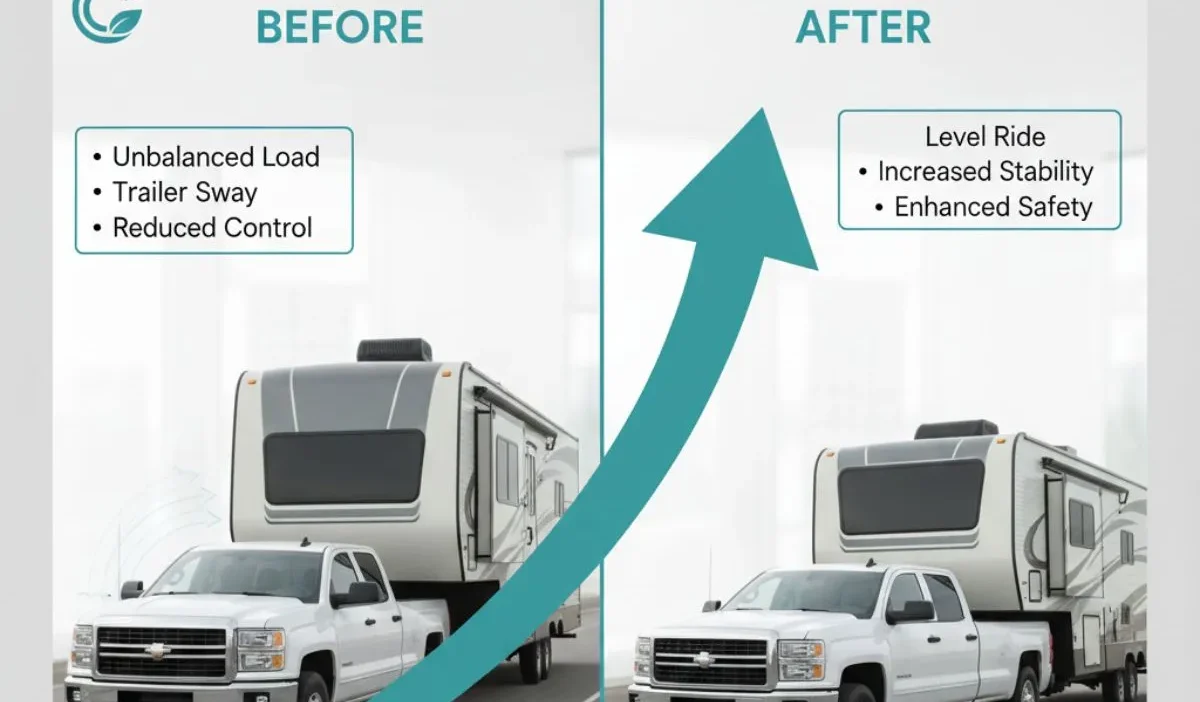
Towing a heavy trailer can be stressful, especially when your truck or SUV starts sagging in the rear or swaying on the highway. This is where a weight distributing hitch comes ina game-changing tool that not only levels your vehicle but also improves safety, handling, and braking performance.
Unlike a standard hitch, a weight distributing hitch redistributes the trailer’s tongue weight across your tow vehicle’s axles, reducing strain on the rear suspension and giving you more control behind the wheel.
Whether you’re hauling a camper, boat, or utility trailer, investing in the right weight distributing hitch can make every journey smoother and safer. In this guide, we’ll explore how these hitches work, the different types available, how to choose the right one, and tips for installation and adjustment, so you can tow confidently and avoid common mistakes that put you and your cargo at risk.
What is a Weight Distributing Hitch?
A weight distributing hitch (WDH) is a specialized towing accessory designed to improve stability and safety when pulling heavy trailers. Unlike a standard ball hitch, which concentrates the trailer’s tongue weight on the rear axle of your tow vehicle, a weight distributing hitch spreads that weight more evenly across both the front and rear axles. This prevents the rear of your truck or SUV from sagging and keeps the trailer level, reducing sway and improving control.
The main components of a WDH include the hitch head, spring bars, shank, and brackets. The hitch head attaches to your tow vehicle’s receiver, while the spring bars run under the trailer frame and connect to the brackets on the trailer’s frame. When properly adjusted, these bars act as levers, distributing the load and lifting the vehicle slightly at the rear to counteract trailer sag.
Weight distributing hitches are especially useful for towing larger trailers, fifth-wheels, or campers, where tongue weight exceeds a few hundred pounds. They not only improve braking, steering, and handling but also reduce wear on tires, suspension, and drivetrain components. Essentially, a WDH transforms towing from a stressful experience into a safer, smoother ride.
How a Weight Distributing Hitch Works
Understanding how a weight distributing hitch works can help you see why it’s essential for safe towing. At its core, a WDH redistributes the trailer’s tongue weight the downward force exerted by the trailer’s front across both the tow vehicle’s front and rear axles. Without it, the rear of your truck or SUV can sag, reducing steering control and braking efficiency.
The key mechanism is the spring bars, which are connected between the hitch head on your tow vehicle and brackets on the trailer frame. When you attach the trailer, the spring bars bend slightly under tension, lifting the rear of the tow vehicle and transferring part of the load to the front axle. This action levels the vehicle and trailer, improving handling, braking, and overall stability.
Many WDHs also incorporate sway control, which resists side-to-side movement of the trailer. By counteracting sudden shifts in momentum like gusts of wind or lane changes the hitch keeps both your vehicle and trailer aligned.
The result is a safer, smoother towing experience: the vehicle sits level, steering and braking are more responsive, and the trailer tracks straight behind the tow vehicle. Proper adjustment of the bars and hitch is crucial; too little tension reduces effectiveness, while too much can stress the trailer or vehicle.
Types of Weight Distributing Hitches
Weight distributing hitches come in several types, each designed to meet different towing needs. Understanding these types can help you choose the right hitch for your trailer and tow vehicle.
1. Bar-Style Weight Distributing Hitch
The most common type, bar-style hitches, use steel spring bars to redistribute the trailer’s tongue weight. These bars attach to brackets on the trailer frame, lifting the rear of the tow vehicle and transferring weight to the front axle. They are durable, reliable, and widely available, making them a popular choice for campers, utility trailers, and small RVs.
2. Integrated Sway Control Hitches
Some weight distributing hitches come with built-in sway control. These hitches reduce side-to-side trailer movement, improving stability on highways or in windy conditions. By combining weight distribution and sway control in a single unit, they simplify towing setup and enhance safety.
3. Adjustable vs. Fixed Hitches
- Adjustable hitches allow you to change bar tension and lift to match different trailer weights, offering flexibility for towing multiple trailers.
- Fixed hitches are set for a specific weight range and are generally simpler to install and maintain but lack versatility.
When selecting a weight distributing hitch, consider trailer weight, sway control needs, and whether you need flexibility for multiple trailers. Choosing the right type ensures safer, smoother towing and protects both your vehicle and trailer.
Benefits of Using a Weight Distributing Hitch
A weight distributing hitch (WDH) offers several advantages that make towing safer, more comfortable, and less stressful for both your vehicle and trailer. The most obvious benefit is vehicle leveling. By redistributing the trailer’s tongue weight, a WDH prevents the rear of your tow vehicle from sagging, ensuring that both the front and rear axles share the load. This improves visibility, steering control, and braking performance.
Another key benefit is reduced trailer sway. Heavy trailers can sway due to wind, uneven roads, or sudden maneuvers. A weight distributing hitch, especially one with integrated sway control, keeps the trailer aligned with your vehicle, reducing side-to-side motion and enhancing stability on highways.
A WDH also helps improve braking and handling. When the load is distributed evenly, the tow vehicle maintains better traction, making steering more responsive and braking more effective. This reduces the risk of accidents caused by a trailer pushing the vehicle off course.
Additionally, a weight distributing hitch reduces wear and tear on suspension, tires, and drivetrain components. By leveling the vehicle and distributing weight evenly, it prevents excessive stress on any single part.
Ultimately, a WDH transforms towing from a nerve-wracking task into a safer, smoother, and more controlled experience. Whether you’re hauling a camper, boat, or utility trailer, the right hitch enhances comfort, safety, and vehicle longevity.
How to Choose the Right Weight Distributing Hitch
Choosing the right weight distributing hitch (WDH) is essential for safe and efficient towing. The first step is to consider the trailer’s tongue weight, which is the downward force the trailer applies to the hitch. Most WDHs are rated for specific tongue weight ranges, so it’s important to select a hitch that matches your trailer. Overloading a hitch can compromise safety, while an undersized hitch won’t provide adequate weight distribution.
Next, consider vehicle compatibility. Check your truck or SUV’s towing capacity and hitch receiver size to ensure the WDH will fit properly. Some hitches are designed specifically for larger trucks or SUVs, while others suit smaller tow vehicles.
Trailer size and type also matter. For example, campers, boats, and utility trailers with higher tongue weights often benefit from a WDH with integrated sway control. If you plan to tow multiple trailers, an adjustable hitch may be ideal, as it allows you to change bar tension to match different loads.
Finally, evaluate additional features and budget. Some hitches include built-in sway control, easier installation mechanisms, or corrosion-resistant coatings. While cost is a factor, prioritize quality and safety over price.
By carefully considering tongue weight, vehicle compatibility, trailer type, and features, you can select the perfect weight distributing hitch for smooth, controlled, and safe towing experiences.
Installation & Adjustment Tips
Proper installation and adjustment of a weight distributing hitch (WDH) are crucial for safe and stable towing. While many hitches can be installed by a skilled DIYer, professional installation is recommended for first-time users to ensure optimal performance.
Step 1: Position the Hitch – Begin by inserting the hitch shank into your tow vehicle’s receiver. Make sure it sits at the correct height so the trailer will be level once connected. The hitch head should align with the trailer coupler for smooth attachment.
Step 2: Attach the Spring Bars – Connect the spring bars to the trailer brackets. These bars are the key to redistributing tongue weight. Depending on your hitch type, you may need to use lift brackets to adjust the tension.
Step 3: Adjust Tension – Once connected, measure the bar angle and adjust the tension so the tow vehicle sits level. Too little tension reduces weight distribution benefits, while too much can stress the vehicle or trailer frame.
Step 4: Check Sway Control – If your WDH has integrated sway control, ensure it is properly connected and functioning. Test by gently pushing the trailer side-to-side to verify resistance.
Step 5: Safety Checks – Always double-check all pins, bolts, and chains before driving. Perform a short test drive at low speeds to confirm stability and handling.
Following these steps ensures your weight distributing hitch is properly installed, giving you safer, smoother, and more controlled towing.
Common Mistakes & Troubleshooting
Even experienced tow vehicle owners can make mistakes when using a weight distributing hitch (WDH). Knowing common errors and how to troubleshoot them can prevent accidents and ensure smooth towing.
1. Incorrect Weight Distribution – One of the most frequent mistakes is improper adjustment of the spring bars. If the bars are too loose, the vehicle’s rear may sag, reducing steering and braking control. If too tight, the trailer may lift the rear excessively, putting stress on the tow vehicle’s frame. Always measure the vehicle’s level and adjust tension accordingly.
2. Ignoring Sway Control Needs – Some trailers are prone to sway due to wind or road conditions. Skipping sway control or using an incompatible hitch can make towing dangerous. Ensure your WDH includes sway control if your trailer is large or top-heavy.
3. Overloading or Underloading the Hitch – Exceeding the hitch’s weight rating can damage both the hitch and your vehicle. Conversely, using a hitch rated too high for a small trailer may reduce effectiveness. Always match the hitch to your trailer’s tongue weight.
4. Improper Installation – Loose pins, chains, or misaligned brackets can compromise safety. Double-check every connection before driving.
5. Neglecting Routine Inspection – Regularly inspect spring bars, brackets, and chains for wear or corrosion. Early detection of issues prevents breakdowns and accidents.
By avoiding these mistakes and performing proper troubleshooting, you can maximize the safety, stability, and lifespan of your weight distributing hitch.
Maintenance & Longevity
Proper maintenance of a weight distributing hitch (WDH) is essential to ensure safe towing and extend its lifespan. Regular care keeps all components functioning smoothly and prevents wear that could compromise safety.
1. Inspect Components Regularly – Before every towing trip, check the hitch head, spring bars, shank, brackets, and chains for signs of wear, cracks, or corrosion. Pay special attention to the spring bars, as these handle most of the load and can bend or weaken over time.
2. Lubricate Moving Parts – Apply a thin layer of lubricant to pivot points, pins, and the hitch ball. This reduces friction and prevents metal parts from wearing prematurely. Avoid over-lubrication, which can attract dirt and grime.
3. Check Tightness of Fasteners – Ensure all bolts, nuts, and pins are secure. Loose connections can lead to unsafe towing conditions, excessive sway, or damage to the trailer and vehicle.
4. Clean After Exposure – If you’ve towed in rain, snow, or off-road conditions, clean the hitch thoroughly. Remove dirt, salt, or debris that can accelerate corrosion.
5. Proper Storage – When not in use, store the spring bars and hitch components in a dry location. Covering metal parts helps prevent rust and keeps the hitch ready for the next towing trip.
By following these simple maintenance steps, your weight distributing hitch will remain safe, reliable, and effective for years, giving you peace of mind and smoother towing experiences.
Frequently Asked Questions
1. Can I tow without a weight distributing hitch?
Yes, you can tow without a WDH if your trailer is small and has low tongue weight. However, for larger trailers, skipping a weight distributing hitch can cause sagging, reduced braking efficiency, and trailer sway, making towing less safe.
2. How do I know if my trailer needs a WDH?
If your trailer’s tongue weight exceeds 10–15% of the total trailer weight, or if you notice rear sagging, trailer sway, or poor steering, a weight distributing hitch is recommended. Heavier campers, boats, and utility trailers usually require one.
3. What happens if the hitch is misadjusted?
Misadjustment can cause poor weight distribution, increased trailer sway, uneven braking, or damage to the tow vehicle’s suspension. Always ensure proper bar tension and vehicle leveling before hitting the road.
4. Can I install a WDH myself?
Many hitches can be installed by experienced DIYers, but first-time users may benefit from professional installation to ensure correct tension, alignment, and sway control.
5. How often should I check my hitch?
Inspect your hitch before each trip, paying attention to spring bars, chains, brackets, and pins. Regular maintenance prevents accidents and ensures longevity.
6. Does a WDH improve fuel efficiency?
While a WDH primarily improves safety and handling, leveling the vehicle can reduce drag slightly, offering minor fuel efficiency benefits.
These FAQs address common concerns, helping you tow safely and confidently with a weight distributing hitch.
Conclusion
A weight distributing hitch (WDH) is an essential tool for anyone who regularly tows trailers, campers, boats, or heavy equipment. By redistributing the trailer’s tongue weight across the tow vehicle’s axles, a WDH improves stability, reduces sway, and enhances steering and braking performance. Unlike standard hitches, it ensures that your truck or SUV remains level, preventing rear sag and minimizing strain on suspension, tires, and the drivetrain.
Beyond safety, a weight distributing hitch transforms the towing experience. It provides smoother handling on highways, greater control during sudden maneuvers, and peace of mind knowing your trailer tracks correctly behind your vehicle. With the right typewhether bar-style, integrated sway control, adjustable, or fixed you can match your hitch to your trailer’s weight, size, and towing conditions. Proper installation, adjustment, and regular maintenance are key to maximizing its benefits and longevity.
Ultimately, investing in a high-quality WDH is not just about convenience it’s about safety, vehicle protection, and confidence on the road. By understanding how it works, choosing the right model, and following proper installation and maintenance practices, you ensure every towing trip is safer and more enjoyable.
If you tow frequently or handle heavy trailers, a weight distributing hitch is a smart, practical upgrade that makes every journey smoother, safer, and worry-free.

I’m Leo, the Pun Master behind Punsboxx.com. I turn everyday words into laugh-worthy puns that’ll tickle your brain and brighten your day!