Weight gain is one of the most common concerns for people considering or starting birth control. While many worry that hormonal contraceptives will automatically lead to added pounds, the reality is more nuanced.
Not all birth control methods affect weight in the same way, and factors like metabolism, lifestyle, and genetics play a significant role. Understanding which methods are more likely to cause weight changes and which are generally weight-neutral can help you make an informed choice that fits your health goals and lifestyle. I
n this guide, we’ll break down the different types of birth control, examine scientific evidence on weight gain, and address common myths that can make the topic confusing. Whether you’re looking for pills, implants, IUDs, or non-hormonal options, this article provides a clear, evidence-based overview to help you navigate birth control decisions without unnecessary worry about your weight.
Understanding Birth Control and Weight Gain
Before diving into which birth control methods may cause weight changes, it’s important to understand how different contraceptives work. Birth control options generally fall into two categories: hormonal and non-hormonal. Hormonal methods, such as pills, implants, injections, patches, and certain IUDs, contain synthetic versions of hormones like estrogen and progestin. These hormones regulate ovulation and prevent pregnancy, but they can also influence appetite, water retention, and fat storage in some individuals.
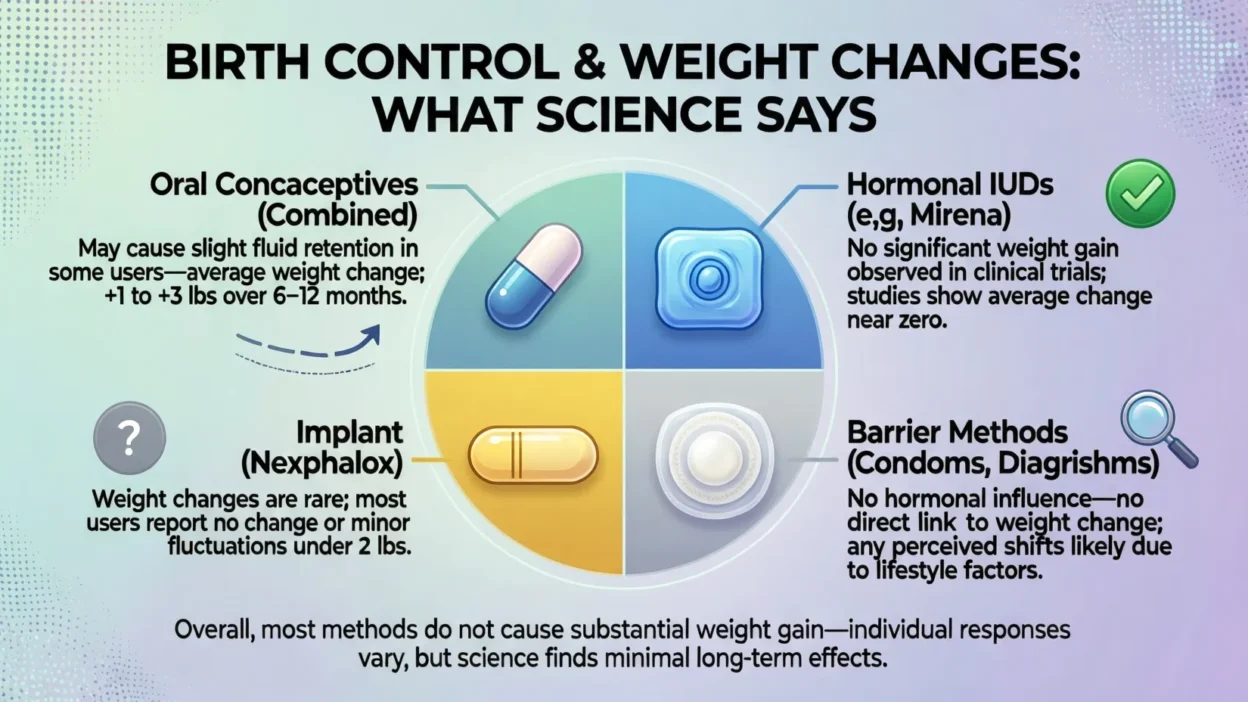
Despite popular belief, not all hormonal contraceptives cause significant weight gain. Research shows that most people experience minimal or no change in weight when using methods like combined oral contraceptives or hormonal IUDs. In contrast, some methods, particularly Depo-Provera injections, have a stronger link to weight gain.
Non-hormonal options, such as copper IUDs, condoms, and fertility awareness methods, do not contain hormones and are generally weight-neutral.
It’s also important to recognize that weight changes while on birth control can result from other factors like diet, activity level, stress, and age. Understanding the type of birth control you’re using—and its potential effects—helps separate myths from reality and make more informed choices.
Types of Birth Control and Their Impact on Weight
Birth control comes in a variety of forms, and each affects weight differently. Understanding these differences can help you choose a method that aligns with your lifestyle and health goals.
Combined oral contraceptives (COCs), which contain both estrogen and progestin, are among the most common methods. Studies show that most users experience little to no weight gain. Any small changes are often due to water retention rather than fat accumulation.
Progestin-only pills (mini-pills) and hormonal IUDs (like Mirena or Skyla) also tend to be weight-neutral for most users. Hormones in these methods act locally or in smaller doses, limiting their impact on metabolism or appetite.
Contraceptive implants (Nexplanon) release progestin steadily and may cause slight weight changes for some individuals, but research indicates that significant gain is uncommon.
Depo-Provera injections, however, have the strongest link to weight gain. Many users report an increase in pounds over months, often due to changes in appetite and fat storage.
Non-hormonal methods, including copper IUDs, condoms, and fertility awareness, are generally weight-neutral, making them suitable for those concerned about changes.
Factors That Influence Weight Changes
Not everyone experiences weight gain on birth control, and several factors determine how your body responds. Age and metabolism play a significant role—metabolic rate naturally slows with age, making weight changes more likely over time, regardless of contraceptive use.
Lifestyle factors are also crucial. Diet, exercise habits, and sleep patterns can all impact weight. For example, a high-calorie diet combined with a sedentary lifestyle may make hormonal effects on appetite or water retention more noticeable. Stress levels can influence hormone balance, sometimes contributing to increased cravings or fat storage.
Genetics and hormonal sensitivity further explain why two people using the same method may have different experiences. Some individuals are more sensitive to estrogen or progestin, which can affect fluid retention and fat distribution.
Pre-existing medical conditions, such as thyroid disorders, polycystic ovary syndrome (PCOS), or insulin resistance, can amplify weight changes while on hormonal contraception.
Understanding these factors helps separate birth control myths from reality. Often, minor weight fluctuations are not directly caused by contraceptives but are influenced by a combination of hormones, lifestyle, and individual biology. Awareness of these variables allows you to make informed choices and manage potential changes effectively.
Myth-Busting Common Misconceptions
There are many myths surrounding birth control and weight gain, and it’s easy to feel concerned without separating fact from fiction. One of the most common misconceptions is that all birth control methods automatically cause weight gain. In reality, research shows that most hormonal contraceptives, such as combined pills or hormonal IUDs, have minimal impact on weight for the majority of users.
Another widespread myth is that weight gain from birth control is permanent. Most minor increases, often due to water retention or appetite changes, are usually reversible after stopping the method. Significant, sustained weight gain is rare and mostly associated with Depo-Provera injections.
Some people also believe that birth control causes belly fat specifically, but studies indicate that weight changes are usually distributed across the body rather than localized.
Finally, the idea that switching pills will always prevent weight gain isn’t guaranteed. While some formulations may reduce side effects, individual responses vary due to genetics, metabolism, and lifestyle.
By addressing these myths, you can make more informed choices and avoid unnecessary worry. Evidence shows that most contraceptives are weight-neutral, and lifestyle factors often play a larger role than the birth control itself.
How to Manage or Minimize Weight Gain
Even though most birth control methods are weight-neutral, some individuals may notice slight changes. Fortunately, there are several strategies to manage or minimize these effects.
Track your body changes. Keeping a journal of your weight, diet, and exercise can help you identify whether changes are related to your contraceptive method or other lifestyle factors.
Focus on a balanced diet. Eating whole foods, including lean protein, fruits, vegetables, and whole grains, can help prevent unwanted weight fluctuations. Limiting processed foods, sugar, and high-calorie snacks also supports healthy weight management.
Stay physically active. Regular exercise, including a mix of cardio and strength training, helps maintain metabolism, prevent fat gain, and support overall health. Even small adjustments like walking or taking the stairs can make a difference.
Manage stress and sleep. Stress hormones and lack of sleep can influence appetite and weight. Techniques like meditation, yoga, or maintaining a consistent sleep schedule can help.
Consult your healthcare provider. If you notice significant weight gain or other side effects, your doctor can suggest alternative birth control methods better suited to your body and lifestyle.
By combining healthy habits with informed choices, most people can prevent or minimize weight gain while using contraception.
When to Consult a Healthcare Provider
While minor weight changes are often normal, certain situations require professional guidance. If you experience rapid or significant weight gain—for example, more than 5–10 pounds in a few months—it’s important to consult your healthcare provider. Sudden changes may indicate that your body is reacting strongly to your current contraceptive method or that an underlying medical condition is contributing.
Other side effects to watch for include persistent bloating, mood swings, irregular bleeding, fatigue, or changes in appetite. These may not be caused solely by birth control, but a healthcare professional can help determine the root cause and suggest alternatives or adjustments.
A doctor can also provide personalized recommendations. Hormonal sensitivity, age, metabolism, and pre-existing conditions all influence how your body responds to contraception. Switching to a different method, adjusting hormone levels, or exploring non-hormonal options can sometimes resolve unwanted side effects without sacrificing effectiveness.
Regular check-ins with your healthcare provider ensure that your birth control method remains safe, effective, and compatible with your lifestyle. Early consultation can prevent unnecessary stress and help you make informed choices that prioritize both reproductive health and overall well-being.
FAQ: Birth Control and Weight Gain
1. Can birth control cause permanent weight gain?
Most birth control methods do not cause permanent weight gain. Minor changes, often due to water retention or appetite fluctuations, are usually reversible once the method is stopped. Depo-Provera injections are the exception, as some users may gain more noticeable weight.
2. Which birth control methods are least likely to cause weight gain?
Non-hormonal methods like copper IUDs, condoms, and fertility awareness are weight-neutral. Among hormonal options, combined oral contraceptives, progestin-only pills, and hormonal IUDs generally have minimal impact on weight.
3. Can birth control cause belly fat specifically?
No, hormonal contraceptives do not typically target belly fat. Weight changes, if any, are usually small and distributed across the body rather than concentrated in one area.
4. How can I manage weight changes while on birth control?
Tracking body changes, maintaining a balanced diet, staying physically active, managing stress, and getting adequate sleep can help prevent unwanted weight gain. Consulting a healthcare provider is recommended if significant changes occur.
5. Should I switch birth control if I gain weight?
Only after consulting a healthcare provider. They can suggest alternative methods better suited to your body and lifestyle, ensuring both effectiveness and minimal side effects.
Conclusion
Weight gain is one of the most common concerns when considering birth control, but the reality is more nuanced than popular myths suggest. Most hormonal methods, including combined oral contraceptives, progestin-only pills, and hormonal IUDs, are generally weight-neutral for the majority of users. Depo-Provera injections have the strongest link to weight gain, while non-hormonal methods like copper IUDs, condoms, and fertility awareness are virtually weight-neutral.
It’s important to remember that factors such as age, metabolism, lifestyle, genetics, and pre-existing medical conditions often play a larger role in weight changes than birth control itself. Minor fluctuations are common, and many are temporary or reversible.
By understanding how different contraceptives work, tracking changes in your body, maintaining a healthy diet and exercise routine, and consulting a healthcare provider when needed, you can make informed decisions without unnecessary worry.
Ultimately, the best birth control method is one that balances effectiveness, convenience, and comfort for your body and lifestyle. With accurate information and mindful choices, you can prevent most unwanted weight changes while enjoying safe and reliable contraception.

I’m Leo, the Pun Master behind Punsboxx.com. I turn everyday words into laugh-worthy puns that’ll tickle your brain and brighten your day!